Mount Meru
Mount Meru
Tanzanie's second-highest peak at 4,566 m, Mount Meru offers a 3-day trek in Arusha National Park, ideal before tackling Kilimanjaro.
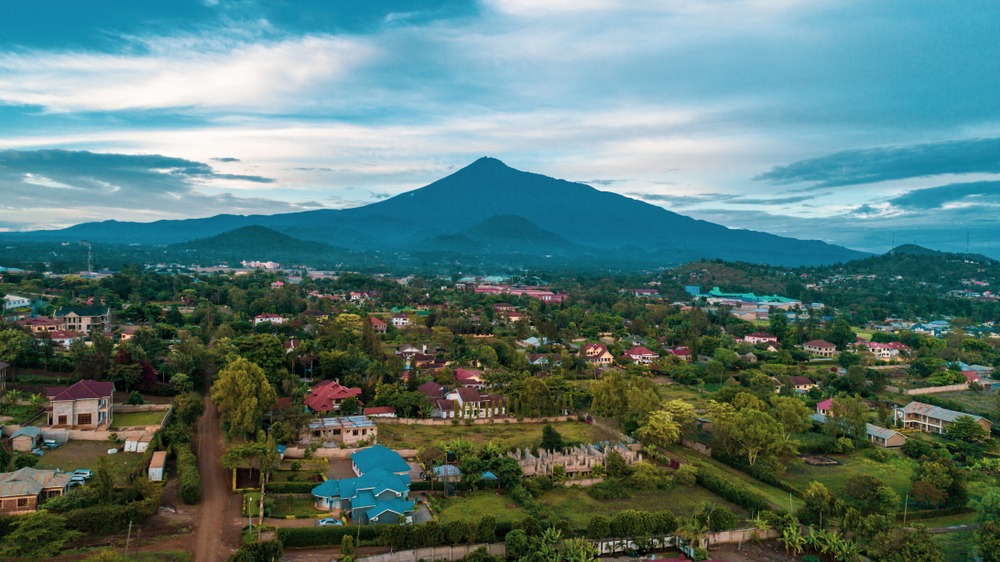
Tanzanie's second-highest summit after Kilimanjaro and one of Africa's loftiest peaks, Mount Meru rises to 4,566 metres within the Arusha National Park. This active volcano offers a renowned three-day trek, often used as an acclimatization climb before tackling Kilimanjaro.
Why climb Mount Meru
Meru presents several compelling reasons to include it in your Tanzanie itinerary:
- Africa's fourth-highest peak by most rankings and Tanzanie's second, with a distinctive volcanic silhouette.
- Ideal acclimatization climb before Kilimanjaro (5,895 m), thanks to gradual elevation gain and an altitude more than 1,000 metres lower.
- Complete vegetation zones crossed in just days: dry forest, alpine moorland, alpine desert.
- Clear views of Kilimanjaro from the summit on cloudless days.
- Wild fauna during the lower stages of the national park: giraffes, buffalo, antelopes, primates.
History and geology
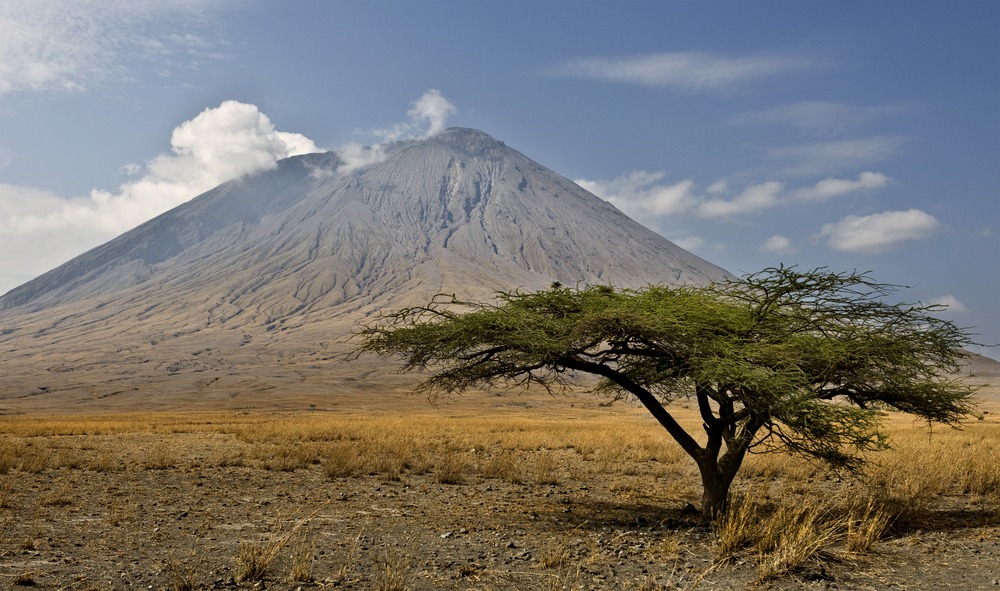
Mount Meru is a stratovolcano classified as active. Its last major eruption occurred in 1910, and fumaroles were recorded between 2014 and 2015, evidence of residual activity. Its ancient lava flows, which shaped the mountain's dark slopes, explain its nickname of "Black Mountain".
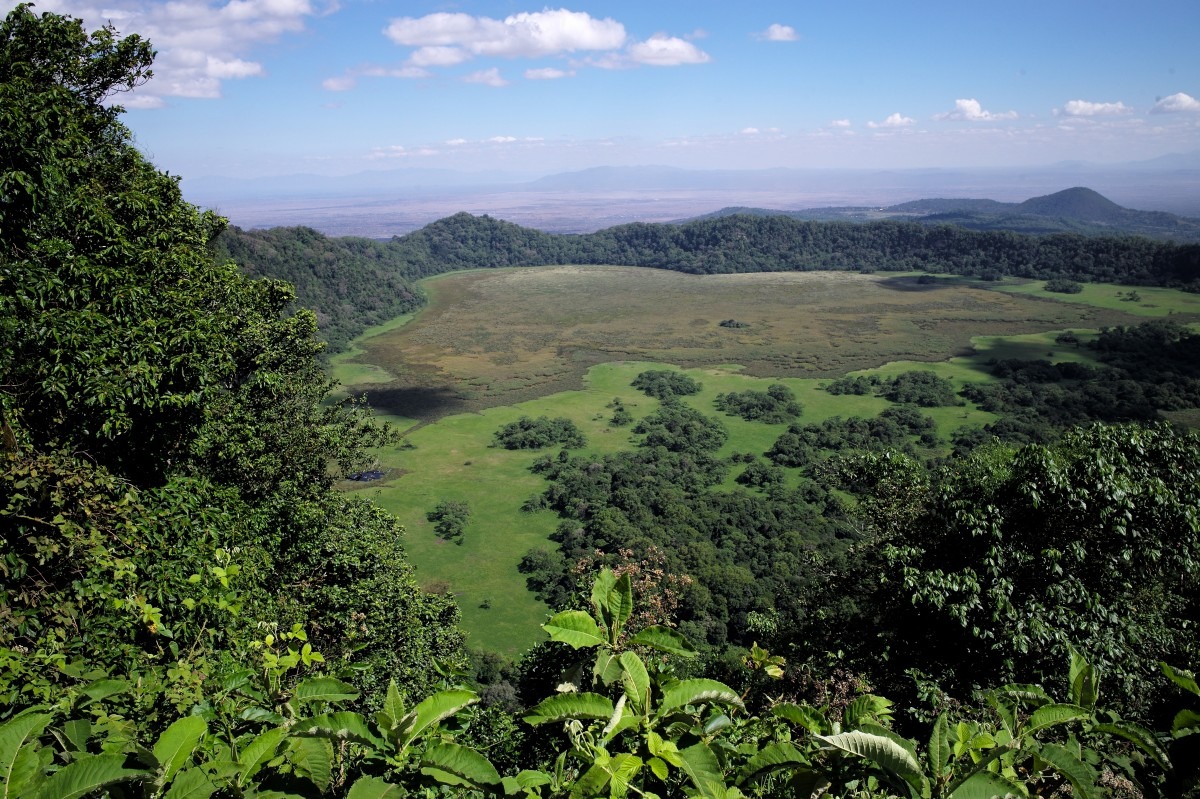
Its most striking feature is a 5 km diameter caldera, open to the east and shaped like a horseshoe. The inner walls of this amphitheatre reach up to 1,500 metres in height, the result of an ancient volcanic cone's collapse. The inner crater and secondary cone (Ash Cone) remain visible from the summit ridge.
The ascent trek stage by stage
The classic ascent unfolds over three days (a four-day option is available for better acclimatization), departing from Momela Gate in Arusha National Park.
Day 1: Momela Gate → Miriakamba Hut
First stage through dry forest, rich in wildlife. This is the only section where encounter with large mammals is likely, which justifies the mandatory presence of an armed park ranger: the zone is home to buffalo, hyenas and, more rarely, leopards.
Day 2: Miriakamba Hut → Saddle Hut
Ascent through alpine moorland, dotted with giant heathers and groundsels. Vegetation becomes progressively sparser as you approach the saddle connecting Meru to Little Meru (3,820 m), often climbed late in the day to prepare for altitude.
Day 3: Saddle Hut → summit → descent
Departure before dawn to reach Socialist Peak (4,566 m) at sunrise. The final ridge hugs the caldera's edge, with vertiginous views into the crater and, beyond, Kilimanjaro's silhouette emerging from the clouds. Full descent to the park gate during the day.
Practical information
- Duration: 3 to 4 days for the round trip to the summit.
- Difficulty: challenging but accessible to anyone in good physical condition. No technical sections, except for the exposed final ridge.
- Guide requirements: certified guide and armed ranger are mandatory, recruited through an agency or directly at the park entrance.
- Accommodation: solid huts (Miriakamba and Saddle Huts), equipped with dormitories and dining facilities.
- Permits and entrance fees: to be settled with park authorities, with separate pricing from safari packages.
- Equipment: warm clothing essential (frost possible at the summit), headlamp, trekking poles, gloves, waterproof garments.
When to go
The dry season, from June to early March, offers the best conditions: clear skies, manageable trails, views of Kilimanjaro from the summit. The months of June to October are most stable. Occasional rains may occur in November. The long rainy season (March to May) makes the trek significantly harder and is best avoided.
Regardless of the month, expect substantial temperature swings: night-time temperatures drop below freezing at altitude.
How to get there
The starting point is Arusha, northern Tanzanie's main city and gateway to the park.
- By air: Kilimanjaro International Airport (JRO) is about an hour's drive from Arusha and provides the most convenient access.
- From Arusha: Momela Gate of Arusha National Park, the trek's starting point, lies roughly thirty kilometres away. Transfer is typically arranged with the trekking operator.
What to combine in the region
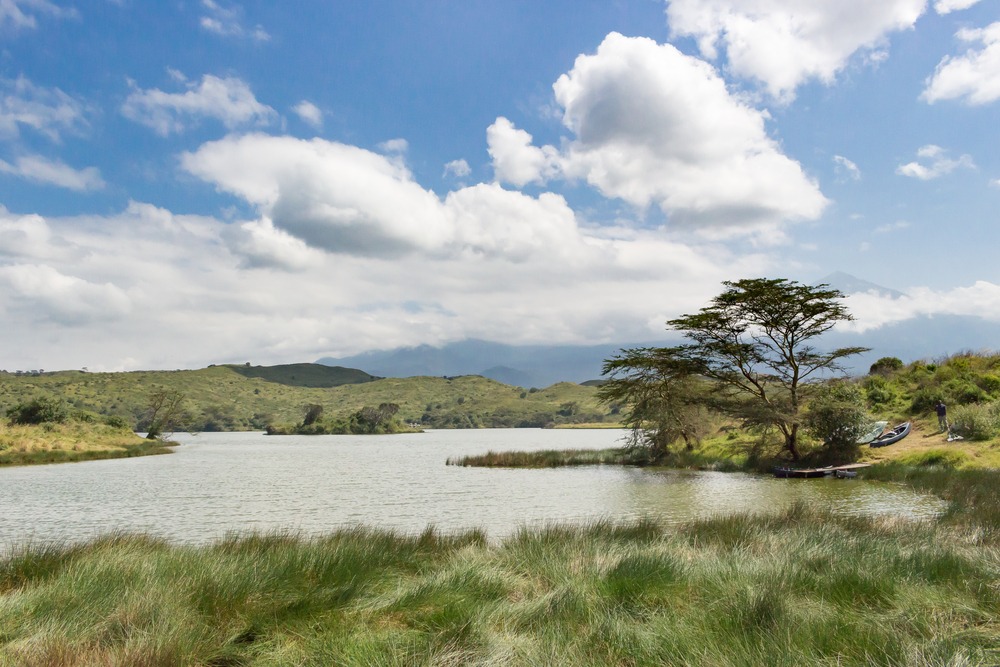
- Arusha National Park: walking safaris, canoeing on Momela Lakes or 4x4 drives around Meru.
- Arusha: logistical hub, markets, trekking and safari operators.
- Boma Natural History Museum: to understand regional geology before the trek.
- Great Rift Valley: natural extension of the northern circuit.
- Barranco Hut Camp: key stage for those continuing to Kilimanjaro.
Frequently asked questions
Frequently asked questions
Meru is shorter (3 days versus 5 to 8) and lower (4,566 m versus 5,895 m), but its daily elevation gain is steeper and the final ridge is more exposed. It often serves as an acclimatization test before Kilimanjaro.
The lower stages traverse forest inhabited by buffalo, hyenas and, more rarely, leopards. The armed ranger from Arusha National Park is required by authorities for safety reasons.
No, but good physical fitness is essential. The trek involves no technical sections (no ice or scrambling), but the summit day is long and altitude is felt.
Yes, on clear days, Kilimanjaro appears to the east, roughly 70 km away. Sunrise from Socialist Peak with Kibo silhouetted against the sky is one of the trek's defining moments.
The volcano is classified as active. Its last eruption was in 1910 and fumaroles were observed between 2014 and 2015. The risk remains very low over the span of a trek, though activity is monitored.
Include Mount Meru in your journey
Ascending Meru fits naturally into a northern Tanzanie circuit combining trekking, safaris and cultural experiences. To build a tailor-made itinerary including Meru, Kilimanjaro or the surrounding major parks, explore our Tanzanie trips.
Interested in this visit?
We can include it in your personalised itinerary.