Stella Point on Kilimanjaro
Stella Point on Kilimanjaro
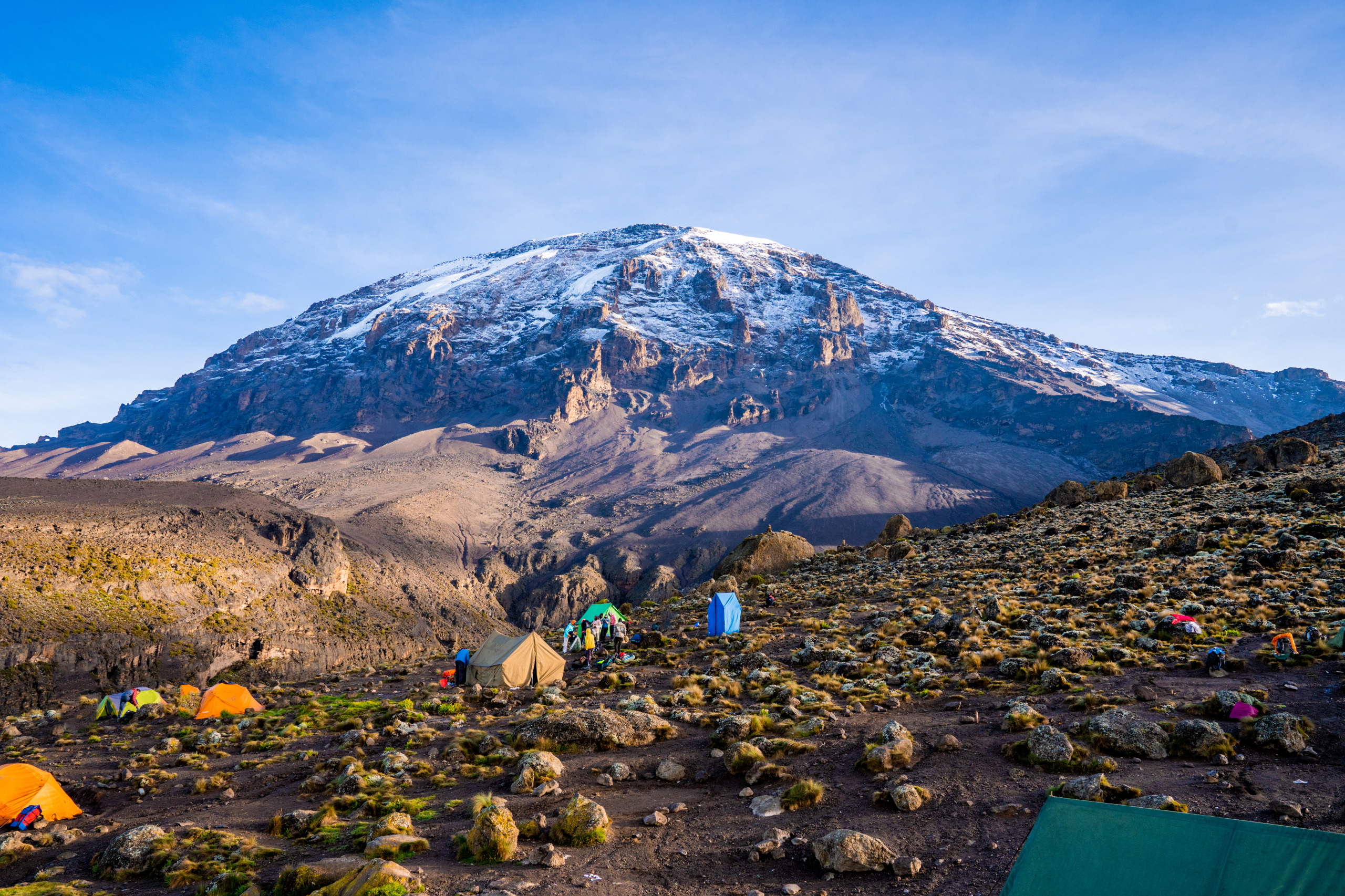
Stella Point, at 5,756 m on the rim of the Kibo crater, marks arrival at the summit ridge of Kilimanjaro after the night climb from Barafu.
Stella Point marks, at 5,756 meters, arrival at the rim of the Kibo crater during the ascent of Kilimanjaro. Located 139 meters below Uhuru Peak, this waypoint concludes the most difficult nocturnal climb of the trek and provides access to the summit ridge. Here's what you need to know before heading up.
Why Stella Point matters as much as the summit
Stella Point sits on the rim of the Kibo volcano, on the southeastern flank of Kilimanjaro. This is where the Machame, Lemosho, and Shira routes converge after the long climb from Barafu camp. For many trekkers, reaching this point represents the true victory: the steep slope through volcanic scree gives way to the ridge, and arrival often coincides with sunrise over the Tanzanian plains.
The official altitude inscribed on the KINAPA sign (Kilimanjaro National Park Authority) is 5,756 meters, or 18,885 feet. The historical rocky summit lies slightly lower, at 5,745 meters: the 11-meter difference is explained by the sign's location, placed where the Lemosho route first meets the crater rim. Uhuru Peak, the highest point on the African continent, rises 139 meters higher, at 5,895 meters, approximately 45 minutes to 1 hour's walk along the ridge.
Guides often say that once Stella Point is reached, the climb is nearly assured. Those who choose to stop there, due to fatigue or altitude symptoms, still receive an official KINAPA certificate bearing the inscription "Stella Point – 5756m".
The story of Estella Latham, the crater's "Stella"
The location takes its name from Estella Latham, an Irish woman born in Youghal in 1901 and nicknamed Stella. She emigrated to South Africa where she married Kingsley Latham, a member of the Mountain Club of South Africa. On July 13, 1925, accompanied by her husband and local guides Filipos and Sambuananga, she reached the crater rim around midday after a difficult climb during which the team reportedly lost its way.
Kingsley Latham named the place "Point Stella" in honor of his wife, who ranks among the first women to have set foot on the rim of the Kibo crater. The name persisted, slightly modified to "Stella Point," and today identifies one of three officially recognized points on the summit crown, alongside Gilman's Point (Marangu route) and Uhuru Peak.
What you'll see arriving at Stella Point
Arrival typically occurs between 6 and 7 a.m., after a nocturnal climb. The panorama depends on conditions, but you generally make out:
- The Kibo crater, a broad volcanic depression still active, and its central cone (Reusch Crater);
- The Rebmann and Ratzel glaciers, which frame the southern section of the trail and visibly retreat year after year;
- The ridge leading toward Uhuru Peak, dotted with ice seracs and snowfields;
- The Tanzanian plains below, Mount Meru in the distance on clear days, and sometimes a sea of clouds beneath the rim.
The location also serves as a strategic pause: you assess your physical state, rehydrate, and decide whether to continue toward Uhuru Peak.
Preparing the final ascent from Barafu
Barafu camp, at 4,640 meters, is the base camp for the night push on most routes (Machame, Lemosho, Shira, Umbwe). Departure occurs in the dead of night, usually around midnight. The climb to Stella Point covers roughly 4 km (sources vary between 3.5 and 5 km depending on the trail) with 1,116 meters of elevation gain, through volcanic scree in switchbacks, between the Rebmann and Ratzel glaciers.
Plan on 6 to 7 hours average to reach the crater rim, respecting the "pole pole" pace (slowly, in Swahili) which remains the golden rule of acclimatization. A few useful recommendations:
- Acclimatization: favor a 7 to 8-day minimum itinerary, which multiplies rest stops and applies the principle "climb high, sleep low";
- Physical fitness: several months of regular endurance training (long walks with a pack, cardio) are essential;
- Equipment: layered clothing system (thermal underwear, fleece, waterproof windbreaker), warm gloves, hat, reliable headlamp with spare batteries, insulated water bottle, trekking poles;
- Hydration and nutrition: drink abundantly and eat even without appetite, as altitude suppresses hunger.
Temperatures can drop well below freezing during the nocturnal climb, sometimes reaching -15 to -20°C with wind. Any marked symptoms of acute mountain sickness (intense headaches, nausea, disorientation) must be reported immediately to your guide.
When to attempt the ascent
Kilimanjaro can be climbed year-round, but two windows are distinctly more favorable:
- January to March: short dry season, milder temperatures at altitude, moderate crowds, possibility of snow on the summit ridge;
- June to October: long dry season, often clear skies, this is peak season on the mountain.
The long rains period (mid-March to May) and short rains (November) should be avoided: slippery trails, reduced visibility, more snow at the summit. Many trekkers choose a night push close to the full moon, which illuminates the scree field during the nocturnal ascent.
How to reach the trek starting point
All ascents depart from the Moshi or Arusha region, at the foot of the massif. Kilimanjaro International Airport (JRO) is served by several airlines from Europe and the Gulf. Local operators then handle transfers to the gate corresponding to your chosen itinerary (Machame Gate, Londorossi Gate for Lemosho, etc.). Stella Point is only accessible on foot, as part of a guided ascent by a KINAPA-licensed operator, a mandatory requirement for any trek within the park.
What to see in the region
A Kilimanjaro ascent often combines with other highlights of northern Tanzanie:
- Arusha National Park, ideal for an acclimatization day around Mount Meru;
- Ngorongoro Conservation Area, major stage for safari after the trek;
- Ol Doinyo Lengai, the sacred active volcano of the Maasai, another demanding ascent in the region;
- Lake Natron, an alkaline lake with red waters at the foot of Ol Doinyo Lengai.
Frequently asked questions
Frequently asked questions
Stella Point peaks at 5,756 meters on the rim of the Kibo crater, while Uhuru Peak is the highest point on the mountain, at 5,895 meters. The two are connected by roughly 45 minutes to 1 hour's walk along the ridge. The "Congratulations, you are at Uhuru Peak" sign is found only at the final summit.
Yes. KINAPA issues an official certificate mentioning "Stella Point – 5756m," distinct from the Uhuru Peak certificate. It attests arrival at the crater rim and remains recognized as an official achievement of the ascent.
Plan on 6 to 7 hours of nocturnal climbing from Barafu camp (4,640 m), for about 1,116 meters of elevation gain over volcanic scree terrain. Departure typically occurs around midnight to arrive at sunrise.
The name comes from Estella "Stella" Latham, an Irish woman born in 1901, who reached this crater point on July 13, 1925 with her husband Kingsley Latham and guides Filipos and Sambuananga. Kingsley named the place "Point Stella" in her honor.
It depends on your condition. If fatigue is manageable, you show no marked altitude symptoms, and weather conditions are favorable, the extra walk is worth it. In case of acute mountain sickness, extreme exhaustion, or deteriorating weather, it is wiser to descend from Stella Point.
Preparing your ascent
Stella Point must be earned and demands rigorous organization, from route selection to physical preparation. To build a custom trip including a Kilimanjaro climb and a safari in northern Tanzanie, consult our tours in Tanzanie.
Interested in this visit?
We can include it in your personalised itinerary.