Olduvai Gorge
Olduvai Gorge
Archaeological site inscribed as a UNESCO World Heritage site between Ngorongoro and Serengeti, Olduvai Gorge has yielded some of the most important hominin fossils ever discovered.
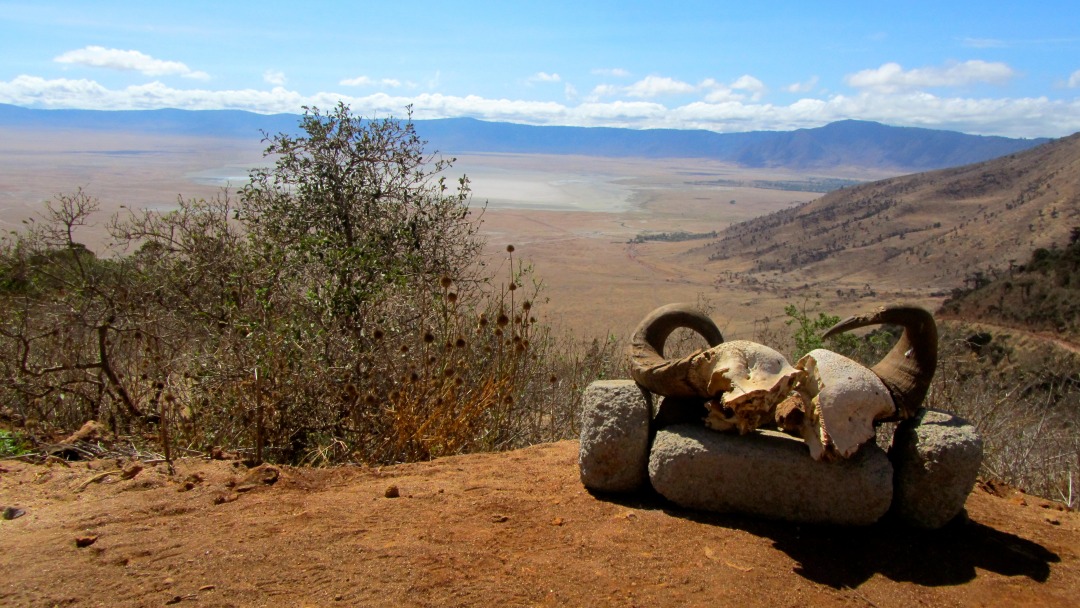
Olduvai Gorge forms a major archaeological site in northern Tanzania, in the Arusha region, between the Ngorongoro crater and Serengeti National Park. It was here that Louis and Mary Leakey uncovered, in 1959, hominin fossils that fundamentally altered our understanding of human evolution. The site has been inscribed as a UNESCO World Heritage site since 1979.
Why visit Olduvai Gorge
The complex stretches for 48 km in length and reaches a depth of approximately 90 metres. For nearly a century, it has revealed a remarkably legible stratigraphy of millions of years of hominin evolution. For travellers exploring Tanzania's northern circuit, a stop here logically completes a visit to the neighbouring major parks by adding a scientific and historical dimension rarely so accessible.
The name "Olduvai" derives from a Maasai word designating a wild sisal plant that grows in the region. The correct spelling would actually be "Oldupai," but Western usage has established the current form.
A history that rewrote prehistory
The gorge was carved by geological activity and fluvial erosion, which cut deeply into sedimentary deposits accumulated over millions of years. This natural cross-section exposes successive geological layers, making it an exceptional excavation site.
In 1959, Louis and Mary Leakey discovered a well-preserved skull of Paranthropus boisei, nicknamed "Nutcracker Man" due to its powerful jaws adapted for grinding. This find confirmed that several hominin species coexisted in Africa approximately 1.75 million years ago.
Subsequent research also uncovered remains of Homo habilis, considered one of the earliest representatives of the genus Homo, as well as traces of Homo erectus, a key species in human migration out of Africa. The site has yielded evidence of fire use and organised hunting, decisive steps in the development of primitive human societies.
Olduvai also gave its name to the Oldowan, a Lower Palaeolithic stone tool industry defined by Louis and Mary Leakey in 1936. Regarded as the starting point of human technology, it is associated with the earliest hominins (notably Homo habilis) and predates the Acheulean, whose tools are considerably more sophisticated.
What to see on site
Olduvai Gorge Museum
Inaugurated in October 2017, the museum overlooks the site and serves as the logical starting point for your visit. On arrival, a local guide introduces the context of the discoveries and the suggested tour.
The galleries present:
- authentic fossils uncovered on the site;
- replicas of the Laetoli footprints, evidence of early hominin bipedalism;
- a section devoted to the prehistoric fauna of the region;
- stone tools illustrating the technical evolution from the Oldowan to the Acheulean.
Allow approximately one hour to explore the entire exhibition; longer if you wish to engage with the scientific interpreters present.
The descent into the gorge
After the museum, you reach the excavation sites themselves in just a few minutes by track. The descent must be made with a local guide, for a modest additional fee. On site, information panels outline the principal discoveries and identify the corresponding geological layers. The visit is brief, but the value lies precisely in standing where the Leakeys worked.
The shifting sand dune
About thirty minutes' drive away lies a geological curiosity: an isolated dune composed of fine volcanic ash rich in iron, which gives it magnetic properties. These particles aggregate into a cohesive mass that moves slowly under the influence of prevailing winds, at an estimated rate of around ten metres per year. You can walk around it, observe its structure, and test its cohesion by hand. Allow up to an hour on site.
When to visit
The gorge is accessible year-round, but the dry season, from June to October, offers the best conditions: tracks passable without difficulty and the possibility of observing archaeologists actively working at excavation sites. The rainy season (March–May) can complicate movement in 4x4 vehicles on the secondary tracks leading to the dune.
How to get there
The site lies approximately 45 km from Laetoli, in the eastern plain of the Serengeti. There is no public transport access: visits are necessarily organised in a 4x4 with driver, either as part of a safari combining Ngorongoro and Serengeti, or as a dedicated excursion from Arusha. Most northern itineraries include the stop between descending Ngorongoro crater and entering the Serengeti, avoiding a specific detour.
On site, an English-speaking local guide is mandatory to visit the excavations and highly recommended for the dune.
What to combine in the region
- Arusha: gateway to the northern circuit and logical starting point for safaris.
- Arusha National Park: varied fauna and Mount Meru reliefs, ideal for warming up.
- Natural History Museum of Boma in Arusha: natural extension of the Olduvai visit from a palaeontological perspective.
- The Great Rift Valley: the broader geological context in which the gorge is situated.
Frequently asked questions
Frequently asked questions
The two sites are approximately 45 km apart and belong to the same palaeoanthropological complex. Olduvai has yielded hominin fossils and stone tools (Oldowan industry). Laetoli is primarily famous for its fossilised footprints dated to approximately 3.6 million years ago, evidence of early bipedalism. The original footprints are no longer visible in situ, but replicas are displayed in the Olduvai museum.
Allow approximately 1 to 1.5 hours for the museum and descent into the gorge. If you add the shifting sand dune, plan for a half-day total, including transfers.
Yes, the museum is brief and educational, and children generally enjoy the shifting dune. The descent into the gorge is more austere and requires a minimum of attention to the guide's explanations to be engaging.
No. An English-speaking local guide is mandatory to access the excavation zones. The museum itself can be explored freely.
To integrate Olduvai Gorge into a complete itinerary, explore our bespoke trips to Tanzania.
Interested in this visit?
We can include it in your personalised itinerary.