
Mangapwani
Mangapwani
Located 20 km north of Stone Town, Mangapwani brings together a coral cave, a slave chamber carved into rock, and a peaceful beach.
Mangapwani is a coastal site situated some twenty kilometres north of Zanzibar town, on the western coast of Unguja Island. The site brings together two striking remnants of the East African slave trade — a coral cave and a chamber carved into rock — as well as a tranquil beach lined with palm trees. In Swahili, Mangapwani means "Arab shore".
Why visit Mangapwani
Unlike the busier beaches on the east coast, Mangapwani offers a little-visited stretch of shoreline where tides are less limiting for swimming. The site combines strong historical interest with a restful seaside setting, making it a worthwhile day excursion from Stone Town.
- Two memorial sites linked to the Arab-Swahili slave trade
- Calm beach suited to swimming and relaxation
- Half-day excursion from Zanzibar town
- Reduced tourist crowds compared to north-eastern beaches
History of Mangapwani
The name Mangapwani, "Arab shore" in Swahili, refers to the presence of Omani merchants who exploited the region during the active period of the slave trade in Zanzibar, between the 1840s and 1880s. It was British missionary Joseph Thomas Last who documented these troglodyte prisons during his travels in East Africa in the 1870s.
The slave trade in Zanzibar was officially abolished by decree of Sultan Barghash in 1873, under British pressure. However, illegal commerce continued clandestinely for several decades, which explains the later use of coastal hideaways such as those at Mangapwani.
What to see at Mangapwani
The Coral Cave
Located approximately 2 km south of the village, the Coral Cave is a natural cavity carved into coral limestone. A narrow opening provides access to a network of galleries leading to a natural freshwater pool, where the region's earliest inhabitants came to draw water. A torch is necessary to explore the lower sections of the cavity.
The entrance was long concealed by vegetation and the cave fell into obscurity. Hamed Salim el Hathy, a wealthy Arab landowner, was then exploiting plantations at Mangapwani with enslaved labour. According to local tradition, a young boy searching for a lost goat happened upon the cave's entrance. Hamed Salim subsequently sent his slaves to draw water from it regularly.
The Slave Chamber
A few hundred metres north of the Coral Cave, the Slave Chamber is a square-shaped cell carved directly into coral rock. Its creation is attributed to Mohammed bin Nassor Al-Alwi, a slave trader who used it after 1873 to hide his captives while awaiting their clandestine resale in Zanzibar or on the island's plantations.
Prisoners, landed on the nearby beach, were packed into this cramped space under extreme unsanitary conditions; many died there from malnutrition and disease. The visit remains harrowing and the site is today presented as a memorial.
Mangapwani Beach
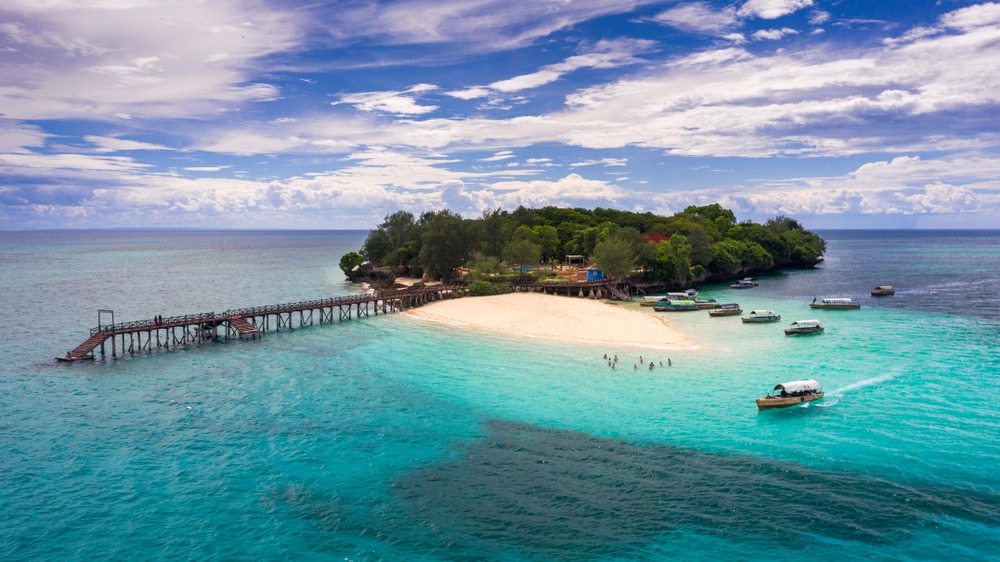
The adjacent beach offers clear sand and shallow waters. It is less exposed to the extreme low-tide phenomenon observed on the east coast, which allows swimming across a wider range of times during the day.
Practical Information
- Duration of visit: allow 2 to 3 hours for the two historic sites, longer if you extend to the beach
- Fees: modest entry payable on-site for each location, in cash (Tanzanian shillings)
- Equipment: torch or headlamp for the Coral Cave, closed-toe shoes, water
- Guide: a local guide on-site greatly enhances the visit, particularly for the historical context of the chamber
- Respect for the site: the Slave Chamber is a memorial site, appropriate attire and behaviour are recommended
When to visit Mangapwani
Zanzibar experiences two rainy seasons: the "great monsoon" from March to May and a "small monsoon" in November. The most pleasant periods to visit Mangapwani extend from June to October (dry season, cooler temperatures) and from December to February (warm and sunny). Avoid April and May, when rains can make access paths difficult.
How to get there
Mangapwani is located some twenty kilometres north of Stone Town. Several options are available from Zanzibar town:
- Organised excursion: the simplest option, often combined with a visit to Stone Town or northern beaches
- Private taxi: 30 to 45 minutes' drive, price to be negotiated in advance
- Daladala (local minibus): budget-friendly option but slow, departures from Mwana Kwerekwe market
- Car or scooter rental: practical if you combine Mangapwani with other north-western sites
Nearby and elsewhere in Tanzanie
To extend your discovery of the country beyond Zanzibar, several major sites are worth a detour on the mainland:
- Ngorongoro Conservation Area — crater and emblematic wildlife
- Arusha National Park — classic base in northern Tanzanie
- Lake Natron — volcanic landscapes and pink flamingos
- Natural History Museum in Boma in Arusha — useful for contextualising regional heritage
Frequently Asked Questions
Frequently asked questions
Organising your trip
Mangapwani fits easily into an itinerary combining Zanzibar and a safari on the mainland. To build a bespoke itinerary, consult our Tanzanie journeys.

Interested in this visit?
We can include it in your personalised itinerary.
