Wild South: Ruaha and Nyerere
Two vast, uncrowded parks: Ruaha with its lion packs at the feet of baobabs, Nyerere traversed by boat along the Rufiji. The quiet counterpoint to northern safaris.
Southern Tanzania encompasses two protected areas we regularly operate from Dar es Salaam: Nyerere National Park, formerly Selous and reclassified in 2019, and Ruaha National Park to the west. Together, they represent nearly 50,000 km² of bush, exceeding Switzerland's surface area. Visitor numbers bear no comparison to the Serengeti: on certain Ruaha tracks, we encounter three to five vehicles a day, against twenty to thirty at northern sites.
Nyerere stretches across the Rufiji basin, the country's largest river. The waterway traces five interior lakes—Tagalala, Manze, Nzerakera, Siwandu and Mzizimia—around which wildlife concentrates during the dry season. It is one of Tanzania's few parks where boat safaris are permitted: our guides navigate the Rufiji between sandbars teeming with Nile crocodiles and groups of hippopotamuses, sometimes over a hundred individuals per pool. The park also shelters a significant population of African wild dogs, a species now rare elsewhere in East Africa, and roughly 4,000 elephants, recovering after intense poaching in the 2010s.
Ruaha lies 130 km west of Iringa, on a plateau at 900 metres altitude in the south, rising to 1,800 metres in the north-west. The park takes its name from the Great Ruaha River, which marks its south-eastern border and partially dries out between September and November. Here, wildlife concentrations become spectacular: buffalo herds sometimes exceed 500 head, and researchers from the Ruaha Carnivore Project estimate that 10 per cent of the world's lion population lives here. Packs often number twenty individuals, compared to five to ten in the north. The landscape is dominated by baobab trees (Adansonia digitata) and commiphoras, with scattered acacia galleries along watercourses.
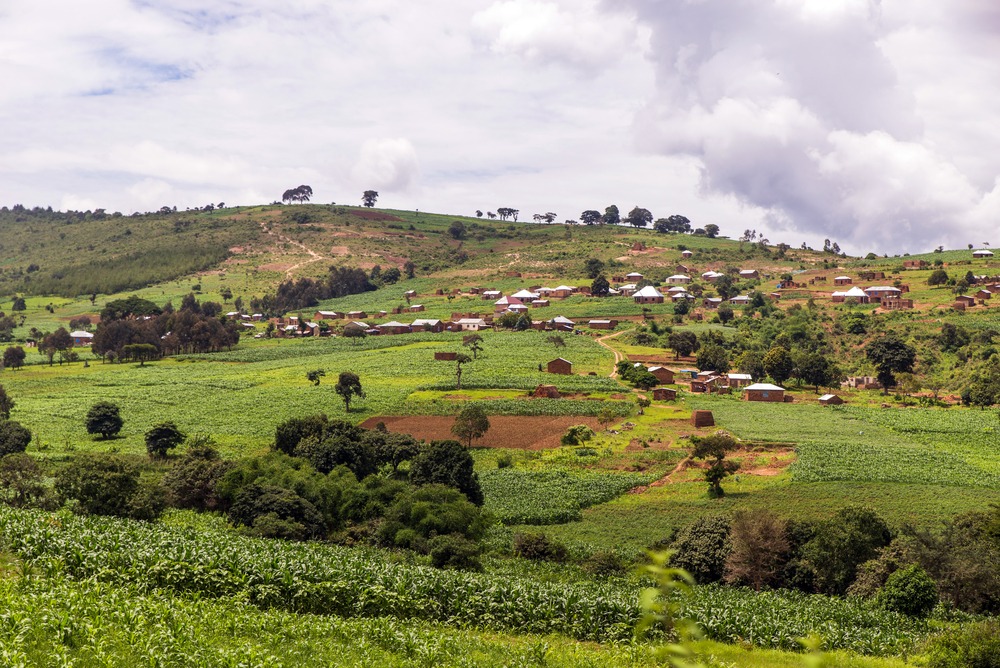
The south remains inhabited by rural communities largely untouched by tourist flows. Around Ruaha, these are primarily Barabaig herders and Hehe cultivators, whose historical capital Kalenga, near Iringa, resisted German colonisation until 1894. To the east, towards Nyerere, you pass through Pogoro and Ngindo villages living from subsistence farming—cassava and sesame—and fishing on the Rufiji. The town of Iringa, a stopover for Ruaha when combining road and air travel, retains a lively market and cuisine heavily marked by makande, a mixture of corn and beans cooked long and slow, and kitumbua, a fermented rice fritter eaten at breakfast.
Access is almost exclusively by air. We work with Auric Air, Coastal Aviation and Safari Air Link, which connect Dar es Salaam to Mtemere and Siwandu airstrips for Nyerere (45 minutes to 1 hour 15 minutes), and to Msembe or Jongomero for Ruaha (1 hour 30 minutes to 2 hours, sometimes with a stopover). The road is technically possible to Nyerere, roughly 250 km from Dar, but remains degraded over the final 80 kilometres and adds nothing to a short stay. For Ruaha, the road from Dar exceeds 600 km and 10 hours of travel—essentially a lost day.
Tourism developed later here than in the north, and accommodation remains predominantly tent camps of 6 to 12 tents, often run by operators holding TANAPA concessions. This mechanically limits pressure on tracks and preserves a rawer, more demanding character for travellers not seeking conventional hotel comfort.
Must-see experiences
Boat safari on the Rufiji. A two to three-hour descent from Mtemere or Siwandu, between crocodile sandbars and hippopotamus pools. A low-angle perspective on wildlife found nowhere else in mainland Tanzania.
Ruaha's lions around Mwagusi. The packs of the Mwagusi river, dried out in the dry season, rank among East Africa's largest. Our guides regularly track groups of fifteen to twenty individuals hunting buffalo.
Baobabs of Ruaha's central plateau. Open forests of ancient baobabs between Msembe and Mdonya, with specimens exceeding 20 metres in circumference. Low-angle light in late afternoon, almost no other vehicles in sight.
African wild dogs of southern Nyerere. The park shelters one of the last viable populations of African wild dogs. Sightings possible mainly in June and July, when packs remain fixed around den sites during breeding season.
Iringa market and Kalenga site. A stopover on the Dar-Ruaha route, Iringa offers a market of Hehe plateau produce and, 15 km away, the historic Kalenga site where Chief Mkwawa resisted the Germans until 1898.
When to visit
We strongly recommend the dry season, from late June to early November, for both parks. Wildlife concentrates around residual water points: the Mwagusi and Great Ruaha for Ruaha, the Rufiji lakes for Nyerere. Daytime temperatures range between 26 and 30°C, nights drop to 14-16°C in July-August, especially on the Ruaha plateau. October and early November are the hottest and driest months, with highs of 33 to 36°C and particularly frequent predator sightings.
The rainy season divides into two phases. The short rains of November-December remain manageable: brief showers, wildlife still visible. The heavy rains from mid-March to mid-May render many tracks impassable, and several camps in both Nyerere and Ruaha close entirely from April to May. January-February is an interesting green season for enthusiasts of migratory birds and young animals, with roughly 100 to 150 mm of rainfall monthly, mostly late afternoon.
Practical advice
Plan a minimum of 5 days on site to combine Nyerere and Ruaha, ideally 7 days including internal flights and at least three nights per park. Shorter stays hardly justify the cost of air rotations. The entry point is Julius Nyerere International Airport in Dar es Salaam, from where daily charter flights depart to both parks' airstrips. We arrange the Nyerere-Ruaha link by direct flight, roughly 1 hour 30 minutes, without returning to Dar.
The most coherent combination remains south then Zanzibar and the Swahili coast: 5 to 7 days of safari followed by 4 to 6 days on the archipelago, with a direct flight from Ruaha or Nyerere to Zanzibar operated several times weekly. Combining the south with the Northern circuit on the same trip is technically possible but complicates logistics and budget: we advise against it under 15 days. The south suits travellers returning to Tanzania after a classic safari, contemplatives tolerating little northern congestion, and photographers seeking pristine light. With young children, Nyerere remains more suitable than Ruaha thanks to boat safaris and shorter distances between camps.