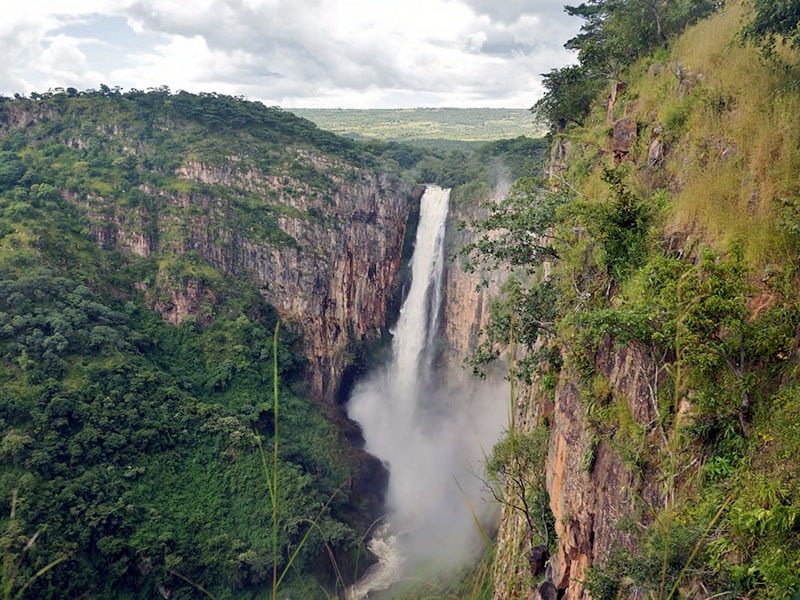
Nyerere National Park
Nyerere National Park
Tanzania's second-largest park, Nyerere combines land-based safari, navigation on the Rufiji River, and observation of African wild dogs in the country's south.
The Nyerere National Park is one of Africa's most expansive protected areas. With a surface area of 30,893 km², it occupies southern Tanzania and ranks as the country's second-largest park after the Serengeti. Its dense wildlife, the Rufiji River running through it, and its moderate visitor traffic make it a credible alternative to the northern parks for a less-crowded safari experience.
Why visit Nyerere National Park
Three elements set Nyerere apart from other Tanzanian parks:
- Scale: 30,893 km² of savannas, miombo forests, and wetlands—one of the world's largest wildlife sanctuaries.
- Hydrographic network: the Rufiji River and its lagoons enable a type of safari rare in Tanzania—boat safari—as a complement to land-based excursions.
- Rarity of observable wildlife: Nyerere is one of Africa's premier sites for spotting African wild dogs (painted wolves), a species that has become rare elsewhere on the continent.
Compared to the Serengeti or Ngorongoro, the park receives considerably fewer visitors, resulting in less-trafficked trails and calmer wildlife encounters.
From Selous to Nyerere: The Park's History
Nyerere National Park was established in 2019, carved out from part of the Selous Game Reserve. The latter, inscribed on the UNESCO World Heritage List since 1982, remains one of East Africa's oldest protected areas; the national park status, more stringent, aims to better regulate tourism and conservation in the northern zone, the most wildlife-rich.
The park is named after Mwalimu Julius Kambarage Nyerere, Tanzania's first president. Its management falls under TANAPA (Tanzania National Parks Authority), the public body responsible for the country's national parks.
Geographically, Nyerere spans Liwale District, southwestern Pwani Region, northeastern Ruvuma Region, and much of southeastern Morogoro Region.
What to See and Do at Nyerere National Park
Complete Fauna, Including Wild Dogs
The park is home to most of East Africa's major mammals: lion, elephant, cheetah, leopard, black rhinoceros, buffalo, giraffe, wildebeest, zebra, and greater kudu. The Big Five are present, though black rhinoceros remains rare and difficult to spot.
Nyerere's signature strength is its African wild dog population. The park is among the few sites where these predators can still be observed in packs during early morning outings.
4x4 Safari
Vehicle-based safari remains the primary activity. Excursions traverse multiple ecosystems—open savannas, miombo forests, wetlands—and typically occur in early morning and late afternoon when wildlife is most active. Park guides know the regular haunts of major predators.
Boat Safari on the Rufiji
The Rufiji River runs through the park and anchors much of its wildlife distribution. A boat outing of approximately two hours allows close approach to hippopotamus populations, observation of crocodiles along the banks, and passage through gallery forests where water birds congregate. This experience is rarely available in Tanzania's northern parks.
Birdwatching
With more than 450 species recorded, Nyerere ranks among East Africa's major birdwatching destinations. Visible species include the pied kingfisher, African fish eagle, white-fronted bee-eater, brown-breasted barbet, and brown-headed parrot.
Walking Safari and Fly Camping
For a more immersive experience, the park permits walking safari, guided by an armed ranger and guide. The walk focuses on tracking, flora, and small wildlife rarely visible from a vehicle.
Fly camping—nights spent in lightweight temporary camps—is also offered by select operators. This option suits those seeking a more rustic bush experience than a traditional lodge.
Practical Information
- Management: TANAPA (Tanzania National Parks Authority).
- Access: exclusively with an authorized guide, as part of an organized safari.
- Hours: open during daylight, typically dawn to dusk.
- Entry fee: TANAPA fees apply, subject to variation—check with your operator. The fee does not include ancillary activities (boating, walking safari, camping).
- Recommended duration: minimum 2 to 3 days to combine land safaris, boat outings, and birdwatching.
When to Visit
The dry season, from June to October, is the most favorable period. Vegetation thins, wildlife concentrates around water sources and Rufiji banks, and tracks remain passable. The rainy season (March–May) renders parts of the park inaccessible, and several camps close.
How to Reach the Park
The park lies in southern Tanzania. Principal entry gates are Mtemere and Matembwe.
- By air: the most convenient option. Daily flights connect Dar es Salaam and Zanzibar to the park's airstrips in under an hour. Several operators serve these routes: Regional Air, Coastal Aviation, Safari Air Link, and Auric Air.
- By vehicle: road access is from Dar es Salaam, with a journey of several hours depending on the entry point and track conditions. From Arusha and the north, the distance is substantial (around 1,000 km), and flying remains the only realistic option.
Combining with Southern Tanzania
Nyerere fits naturally within Tanzania's southern circuit, less visited than the northern parks. It is frequently paired with:
- Mikumi National Park, more accessible from Dar es Salaam, ideal as a first stop.
- Ruaha National Park, the country's largest, renowned for its lions and baobab landscapes.
To expand your journey across the country, consult our guide to Arusha National Park in the north, or explore the Great Rift Valley, which defines East Africa's landscape.
FAQ
Frequently asked questions
Yes, particularly for travelers seeking a less-crowded safari than in the northern parks. Its size, landscape diversity, and the Rufiji River enable a more varied experience, combining land and boat safaris.
All five species are present: lion, elephant, buffalo, leopard, and black rhinoceros. The latter remains rarely observed due to its low density.
Budget 2 to 3 days minimum to combine 4x4 safari, boat trips on the Rufiji, and potentially walking safari or birdwatching.
Yes, access is exclusively with an authorized guide as part of an organized safari. This is both a regulatory requirement and a safety condition.
Yes, the most common pairing is with Mikumi and Ruaha national parks as part of a southern circuit over 7 to 10 days.
Several lodges accommodate families and adapt activities for children. Walking safari, however, is generally reserved for teenagers and adults for safety reasons.
Plan Your Trip
Nyerere National Park fits naturally into an itinerary combining southern safari and Indian Ocean beaches. To prepare your stay, consult our dedicated page on travel to Tanzania: itineraries, recommended duration, and seasonal advice.
Interested in this visit?
We can include it in your personalised itinerary.