Bagamoyo
Bagamoyo
Once the capital of German East Africa and gateway to the continent, Bagamoyo unveils the Swahili coast within just a few square kilometers.
A charming seaside town on the Indian Ocean, Bagamoyo continues to captivate travelers enjoying vacations in Tanzania. Located 70 km north of the capital Dar Es Salaam, just across from the main island of the Zanzibar archipelago. It is a former hub of the slave trade and the ex-capital of German East Africa.
Its distinctive architectural heritage makes it a premier destination for cultural tourism, as well as beach getaways.
A Glimpse into Bagamoyo's History
Founded in the late 18th century, the town served as a transit point for ivory, copra, and slaves who were shipped to the island of Zanzibar. It became an important maritime trading hub in the Indian Ocean, hence its name Bagamoyo, which means "relief and rest."
When the capital was transferred to Zanzibar in 1840, the town became the gateway to the continent. In 1868, the first Catholic mission was established following a land grant from local Muslims in the northern section. From 1886 to 1891, the city served as the capital of German East Africa.
Numerous expeditions for the exploration of the African interior and the search for the sources of the Nile departed from Bagamoyo.
Today
In the region, the population largely makes its living from fishing, as well as agriculture and livestock farming. Seaweed and crustaceans are abundant in the coastal waters of the town and in the estuaries of the Wami and Ruvu rivers. These are primarily the subject of mariculture.
Salt extraction and related activities also feature among the local occupations.
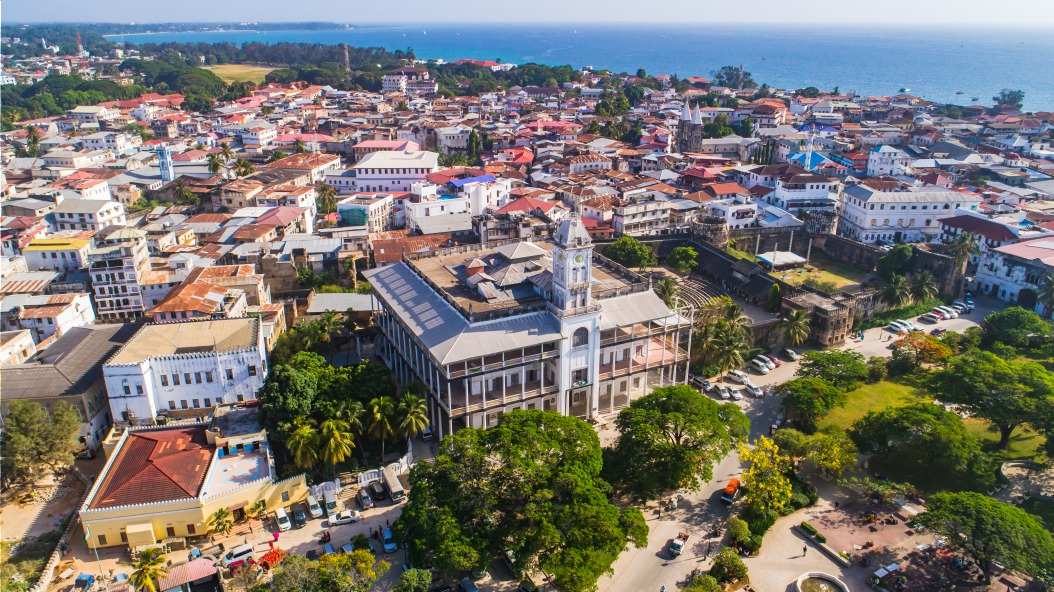
The town boasts an exceptional historical and cultural heritage. With its beach dotted with coconut palms, it enchants numerous travelers. In the city center, you'll find bustling bars and restaurants serving typical dishes, including ugali and African seafood specialties.
Bicycles and motorcycles are the primary means of transportation within the town.
Architecturally, Bagamoyo stands out for its doorways, which often display intricate carvings with Arabic influences. You'll also see former colonial houses in German style.
What to See and Do in Bagamoyo and Its Surroundings?
A Stroll Through the Town
Upon arriving in Bagamoyo, take a tour of the town to observe the old buildings. You'll spot beautiful Arab architecture with thick earthen walls and intricately carved hardwood doors.
Wander the narrow streets between the city's ancient structures to see the German colonial administrative block, the old post office, the art market, the country's first primary school, the suspended tower, old mosques, the fish market, the Caravanserai museum, and much more.
Don't miss a stroll along the Indian Ocean beach and a visit to a sailing dhow-building workshop to discover how local navigators construct their boats.
Exploring the Kaole Ruins
Just southeast of the town lies the village of Kaole, officially known as "Pumbuji." It's one of the oldest quarters that was coveted by Arab immigrants upon their arrival in East Africa's coastal region. The ruins of this village date back to the 13th century and draw many visitors. It was here that the Sultan of Oman chose to settle and built an administrative and military center.
Today, these remains made of earth and coral, along with the museum, allow you to learn more about the history of the ivory trade, the movements of merchants of the era, and slavery, as well as the living culture of the Kaole people, who primarily originated from Asia. Beyond these ruins, you'll find an old port surrounded by a mangrove forest.
The Catholic Museum
Among the must-sees of Bagamoyo, the Catholic mission and museum draw visitors' curiosity. Located about 2 km north of the town, these cultural venues offer well-labeled exhibits from Bagamoyo's heyday.
The museum traces the history of the slave trade, missionaries, and the life of the people in general. It preserves some artifacts from indigenous tribes.
The same complex houses a chapel where the body of Livingstone was laid to rest before its transfer to Zanzibar Town en route to Westminster Abbey. You'll find one of the oldest baobab trees and Catholic, German, and Indian cemeteries.
The Crocodile Farm
The crocodile farm is well worth a visit during your stay in Bagamoyo. You'll learn how these wild predators are kept. It's an opportunity to understand their social behaviors, growth patterns, live capture techniques, feeding and hunting methods, local uses of their byproducts…
A Cruise on the Ruvu River
To better observe the region's aquatic wildlife such as crocodiles and hippopotamuses, a scenic boat ride is highly recommended. Throughout the cruise, you'll encounter numerous endemic bird species. You'll discover local fishing techniques on this river that flows from the Uluguru Mountains and certain parts of Tanzania's southern highlands.
Saadani National Park
The Saadani National Park, located 44 km north of Bagamoyo, is Tanzania's only national park bordering the Indian Ocean. This unique 1,100 km² reserve offers an extraordinary experience where the savanna meets the beach. Accessible in 2-3 hours by road from Bagamoyo, the park is home to lions, elephants, giraffes, and buffalo in an exceptional coastal setting, perfect for combining safari and beach relaxation.
When to Visit Bagamoyo?
Bagamoyo is one of the Tanzanian towns where the climate is always pleasant, with an average annual temperature of 30°C. Rainfall occurs mainly in November, March, and April. While the town is known as a year-round travel destination, the best months to visit are certainly August, June, and July.
Bagamoyo is located 70 km north of Dar es Salaam. By car, expect 1 to 1.5 hours of travel via Old Bagamoyo Road. Regular buses (dalla-dallas) depart from Makumbusho several times daily (2 hours of travel).
FAQ
Is Bagamoyo Worth Visiting?
Yes! With its exceptional historical heritage, Bagamoyo is an interesting stop on the way to Saadani National Park.
How Much Time Should I Budget for Visiting Bagamoyo?
One day allows you to see the essentials. Two or more days are needed to also enjoy the surrounding areas such as Kaole or Saadani Park.
Is It Safe to Travel to Bagamoyo?
The town is generally calm and welcoming. As everywhere, it's advisable to avoid walking alone at night and to keep an eye on your personal belongings.
What Payment Methods Are Accepted in Bagamoyo?
Most small shops and restaurants operate on a cash basis (Tanzanian shillings). Credit cards are only accepted at certain hotels.
Want to discover this destination?
Our local advisors design your tailor-made trip.