Zanzibar
Zanzibar
A Tanzanian archipelago in the Indian Ocean, Zanzibar combines the historic medina of Stone Town, white-sand beaches, spice plantations and exceptional marine life in a single territory.
Zanzibar is a Tanzanian archipelago set in the Indian Ocean, about forty kilometers off the coast of East Africa. The main island, Unguja, concentrates Stone Town — a medina listed by UNESCO — white-sand beaches lined with coconut palms, and spice plantations that shaped the history of global commerce. A Swahili, Arab, Indian and colonial crossroads, Zanzibar offers rare cultural density for an island of this size.
Practical Information at a Glance
Access: direct flights from Dar es Salaam (approximately 20 minutes) or fast ferry from Dar es Salaam port (approximately 2 hours).
Visa: included in the Tanzanian visa; French nationals can obtain a visa on arrival or online (e-visa).
Currency: Tanzanian shilling (TZS); US dollars are widely accepted.
Dress code: covered clothing recommended in Stone Town and villages; swimwear reserved for beaches.
Recommended duration: 5 to 10 days to combine Stone Town, beaches and excursions.
Best time to visit: June to October (dry season) and December to February (short dry season).
What to See
Stone Town concentrates labyrinthine alleys, ornate wooden doors studded with brass nails, mosques, palaces and lively markets. Northern and eastern beaches — Nungwi, Kendwa, Paje — showcase turquoise waters and fine sand. The island's interior hides clove, cinnamon, vanilla and black pepper plantations, accessible by excursion. Jozani Forest shelters the red colobus of Zanzibar, an endemic monkey species.
History and Context
For centuries, Zanzibar was a hub of Indian Ocean trade: spices, ivory and, tragically, enslaved people. The Sultanate of Oman settled there in the 17th century and made Stone Town its capital. The British established a protectorate in 1890. The archipelago became independent in 1963, then united with Tanganyika to form Tanzania in 1964. These layers leave behind unique architecture and culture, a blend of Swahili, Arab and Indian influences.
Highlights of the Visit
Stone Town
The UNESCO-listed historic heart concentrates the Darajani market, the House of Wonders (Beit el-Ajaib), the former slave market and the Anglican cathedral built on its site. The carved doors — some with Indian spires, others with Arab panels — are a distinctive architectural marker.
Beaches and Lagoon
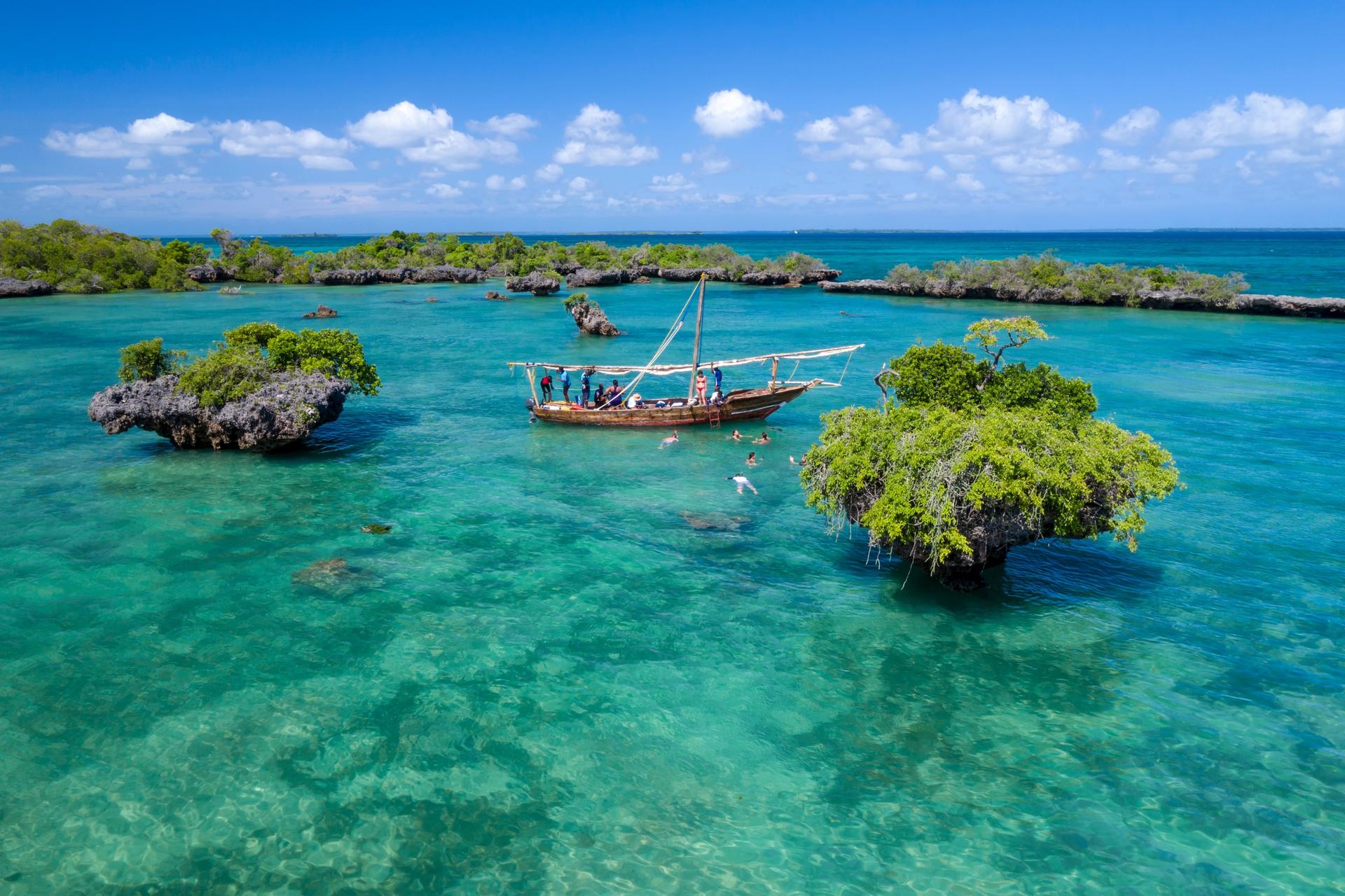
Nungwi, at the northern tip, offers calm waters year-round. Paje, on the east coast, is renowned for kitesurfing thanks to its regular winds. Kendwa hosts a monthly full moon party. Mnemba Lagoon, to the northeast, is one of the region's best diving spots.
Spice Excursion
Spice tours typically depart Stone Town toward plantations in the island's center. Local guides and farmers have you identify spices by smell and touch — a concrete sensory experience, far from folklore.
Jozani Forest
The island's only primary forest, Jozani shelters the red colobus of Zanzibar (Procolobus kirkii), a threatened endemic species. Marked trails traverse mangrove and dense forest. Entry is paid and contributes to conservation.
Etiquette and Visit Guidelines
Cover shoulders and knees in Stone Town, mosques and interior villages.
Always ask permission before photographing residents, particularly women.
Alcohol is available in hotels and tourist restaurants, but consuming it in the street is poorly regarded.
Ramadan alters local schedules and habits: adjust your behavior accordingly.
Photography Tips
Golden morning light is ideal in Stone Town's alleys before the tourist rush. Darajani market comes alive early. For beaches, favor the hour before sunset on the west side (Kendwa, Nungwi). Carved doors photograph best in diffuse light, in the shade of narrow alleys.
Location and Access
Zanzibar City (Stone Town) is the main entry point. Abeid Amani Karume International Airport receives flights from Dar es Salaam, Nairobi and several European destinations in high season. The ferry from Dar es Salaam docks at Stone Town's port. Daladala (shared minibuses) and taxis serve the island; renting a scooter or hiring a car with driver is common for exploring the interior.
Nearby
Stone Town — UNESCO-listed medina, historic and cultural heart of the archipelago.
Jozani Forest — primary forest and sanctuary of the endemic red colobus.
Nungwi Beach — northern beach with calm waters, ideal for swimming year-round.
Paje Beach — hotspot for kitesurfing on the east coast, laid-back atmosphere.
Prison Island (Changuu) — small historic island sheltering giant Seychelles tortoises.
Dar es Salaam — Tanzania's main city, departure point for ferries to Zanzibar.
Frequently asked questions
June to October and December to February correspond to dry seasons. Avoid heavy rains from March to May (masika) and short rains in November.
No. Zanzibar is part of Tanzania: the Tanzanian visa (obtained on arrival or online) is sufficient. Check current conditions before you travel.
Daladala are economical but slow. Taxis and private transfers are more comfortable. Scooter rental suits experienced travelers; interior roads can be rough.
Yes, it's the classic itinerary: safari in the Serengeti or Ngorongoro, then a flight to Zanzibar for a beach-focused end to your trip. Domestic flights from Arusha or Dar es Salaam are frequent.
Mnemba Reef, to the northeast, is renowned for its biodiversity: turtles, dolphins, rays and tropical fish. Visibility is generally excellent during the dry season.
Cover shoulders and knees in Stone Town and villages. Swimwear remains reserved for beaches and hotel pools. This respect is appreciated in this predominantly Muslim society.
Want to discover this destination?
Our local advisors design your tailor-made trip.