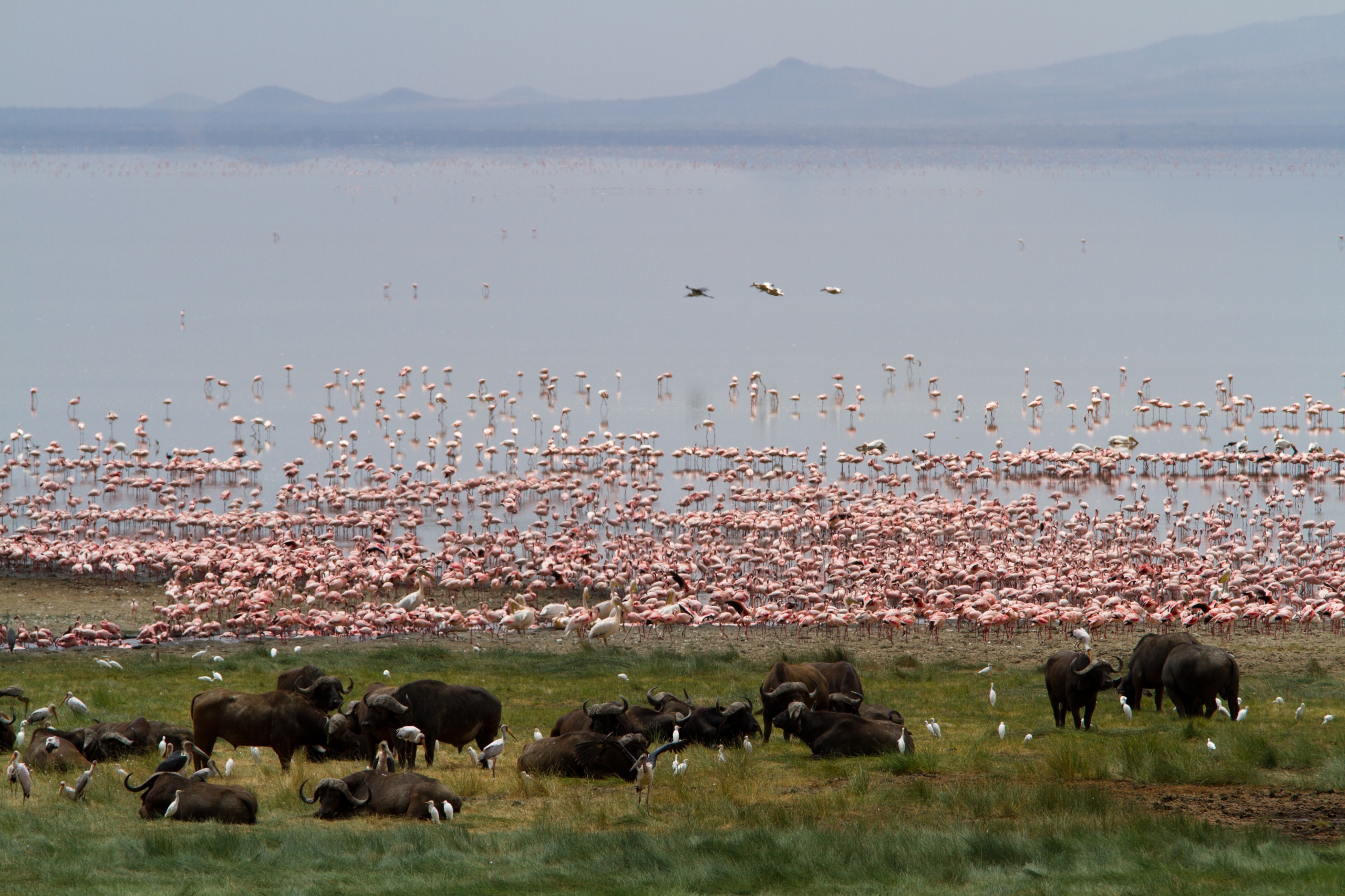
Where can you see pink flamingos in Tanzania?
East Africa is home to hundreds of bird species. Among them? Pink flamingos in Tanzanie, which appreciate the country's climate and wetlands. These tall wading birds populate the
East Africa is home to hundreds of bird species. Among them? Pink flamingos in Tanzanie, which thrive in the country's climate and wetlands. These tall wading birds populate the marshes, the Empakaai and Ngorongoro craters, Lake Natron, and the shores of Lake Manyara during breeding season. But there are many other places where you can observe them…
Lake Momella: seven observation spots in Arusha National Park
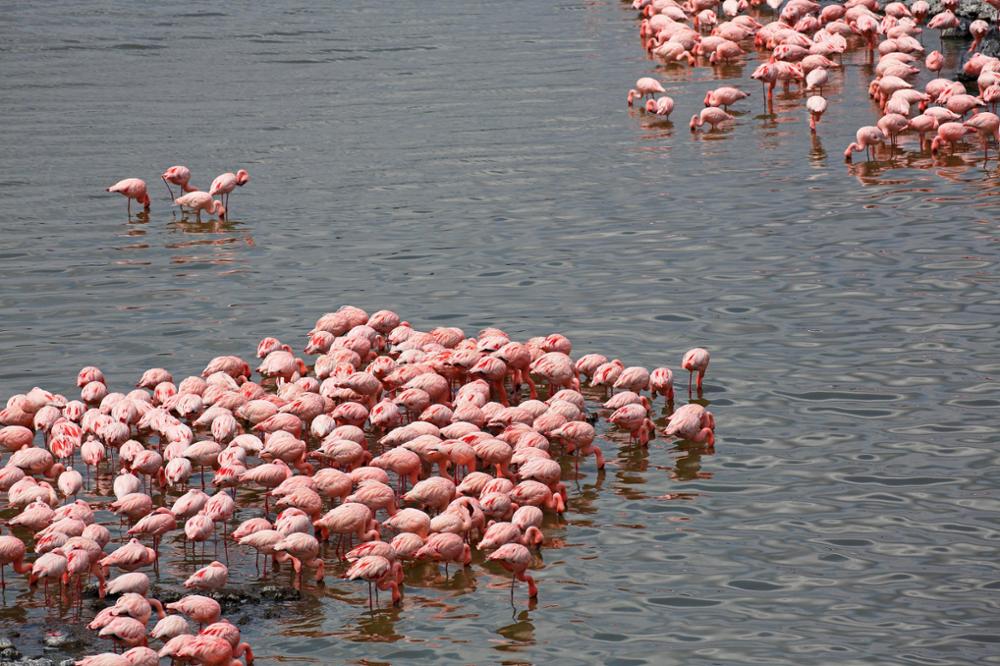
In Arusha National Park, in northern Tanzanie, you'll find the seven Momella lakes (Big Momella, Small Momella, El Kekhotoito, Kusare, Rishateni, Lekandiro and Tulusia). These bring joy to thousands of pink flamingos in search of algae and food along the shores.
Charged with different minerals, the water in each lake has a unique color... Their tones of blue-green gradations – which harmoniously contrast with the unusual pink of the wading birds – offer landscapes of exceptional beauty.
|
Practical information ● Location : Lake Momella Kubwa ● Best time : between November and December, during flamingo migration. You can also observe pelicans, Egyptian geese, or the African Fish Eagle! ● Site feature : Momella lakes owe their colors to a high concentration of micro-organisms, made up of algae and phytoplankton. ● Park entrance : entry to Arusha National Park is charged. Budget around €15 for children aged 5-15 and €39/adult. Free for children under 5. |
Ngorongoro Conservation Area: a UNESCO-listed site ideal for birdwatching
Located in the Arusha region, the Ngorongoro Conservation Area is listed as a UNESCO World Heritage Site. The reasons for this prestigious label? Its exceptional biodiversity (the site is home to endangered animals) and its spectacular landscapes, made up of craters and lakes. Thanks to the diversity of its terrain, the site boasts over 500 bird species on its lands.
Ngorongoro Crater (Lake Magadi – Lake Makat)
Lake Magadi (locally named "Lake Makat") is a saltwater expanse located near Ngorongoro Crater. It's a prime destination for observing pink flamingos, as these birds enjoy the marshes and water points around the lake.
On site, you'll also have the chance to spot storks, crowned cranes, ostriches, and even the impressive Kori Bustard: a massive bird, among the heaviest on the African continent – a single specimen can reach 19 kilograms!
|
Practical information ● Location : Ngorongoro district ● Best time : between November and April ● Site feature : this is an alkaline lake with a very high pH (around 9) that limits aquatic life. Only a few blue-green micro-organisms manage to develop there. |
Empakaai Crater
The Empakaai Crater is a magnificent place where wading birds thrive (attracted by algae and the shores of the caldera). You'll also have the chance to spot buffalo, elephants, and the splendid Impala! About an hour's drive away, you can also observe Golden-winged Sunbirds or the Abyssinian Siskin around Ngorongoro Crater!
|
Practical information ● Location : Ngorongoro district ● Site feature : near the lake you can also spot numerous mammals, such as buffalo and antelopes. |
Lake Ndutu
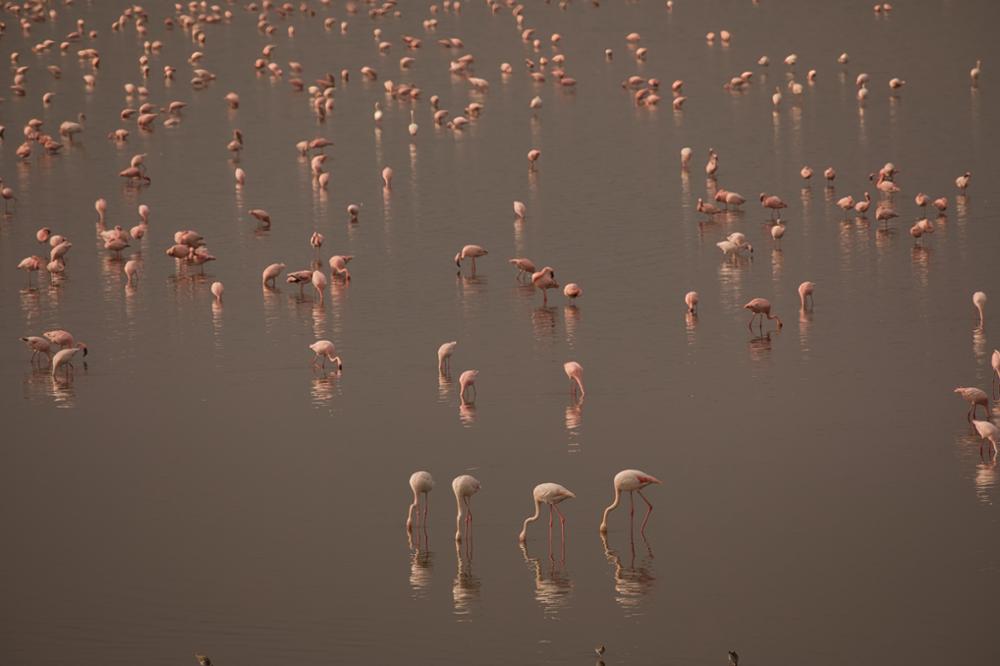
Situated in the highlands of Ngorongoro, Lake Ndutu is home to one of the largest populations of Lesser Flamingos – the smallest species of pink flamingos, measuring 90-100 cm compared to their counterparts which measure between 120 and 140 cm. This species is also distinguished by the pale pink color of its plumage.
|
Practical information ● Location : Ngorongoro district ● Best time : during the rainy season (June to October) ● Site feature : Lake Ndutu is a renowned birdwatching spot. In addition to pink wading birds, you can also spot storks and pelicans. |
Lake Eyasi
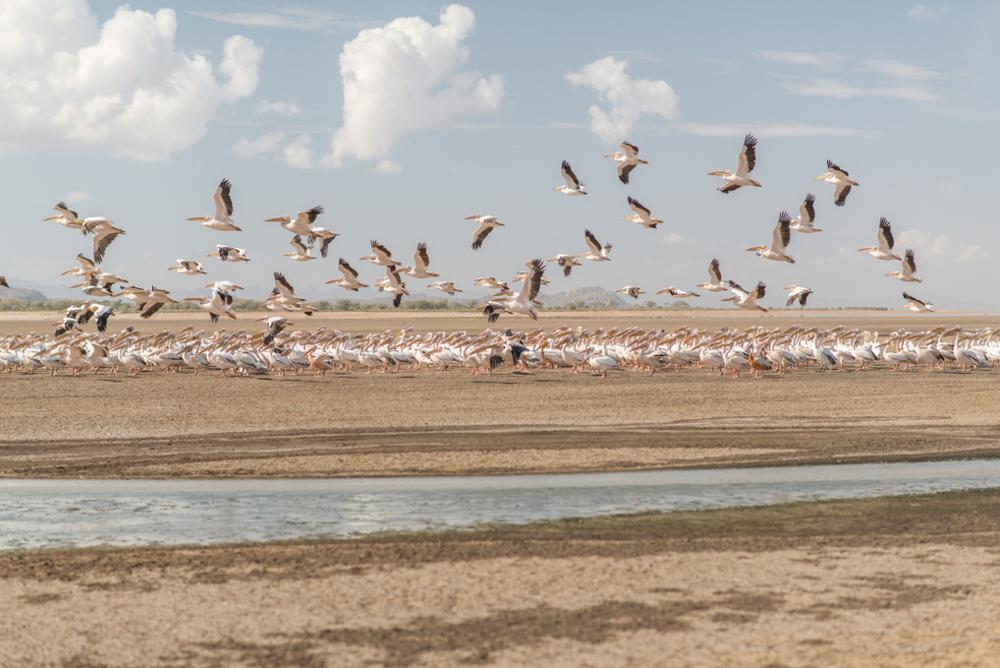
In the Rift Valley (south of the Ngorongoro region), you'll find Lake Eyasi. It's a seasonal lake that disappears with water evaporation during the dry season. To be sure of spotting pink flamingos, the period between May and October is therefore not recommended.
To reach this shallow lake, you'll need to take a trail from the village of Karatu – this excursion through the fields is also an opportunity to discover local life! Once there, you can observe the tall pink wading birds, as well as storks, pelicans, and African Spoonbills. On the mammal side? Lake Eyasi is home to primates, antelopes, and hippopotamuses.
|
Practical information ● Location : Arusha region ● Best time : during the flamingo breeding season ● Site feature : Eyasi is an alkaline lake (also called a "soda lake") whose water level varies depending on rainfall. This lake is also a recognized spot for hosting numerous hippopotamuses. |
Lake Manyara National Park: the place to see colonies of pink flamingos and tall wading birds
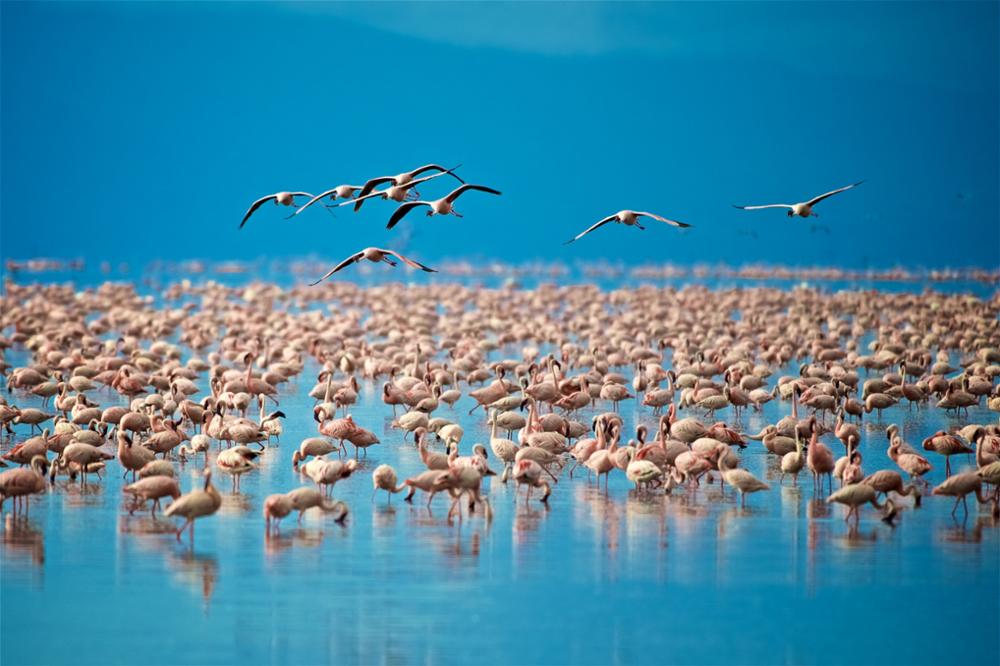
Spanning 325 km², Lake Manyara National Park is known for hosting over 400 bird species. Among them? White pelicans, raptors, crowned cranes, and Sacred Ibises… During their breeding season, storks also settle in the park.
Covered two-thirds by its namesake lake, during rainy seasons, the site is an extraordinary spot for observing pink flamingos. Concentrated in marshy areas, the wading birds create landscapes with rosy hues as they gather by the thousands. Conversely, when the lake dries up, the lack of water pushes the pink flamingos to move to other regions…
|
Practical information ● Location : Arusha region ● Best time : rainy season ● Site feature : Lake Manyara sits at the edge of lush forest made up of Acacias. This is home to colonies of baboons and blue monkeys. |
Lake Natron: THE place to observe pink flamingo migration in Tanzanie
Located in the north of the country, Lake Natron is a conservation area listed on the Ramsar Sites list. It's considered one of the best places to observe pink flamingos: during breeding season, the site attracts nearly two million specimens coming to incubate their eggs!
With its high pH and intense heat, the Lake Natron zone offers little food and attracts few animals. Result? It provides a safe habitat for wading birds, which can nest there without worrying about predators and egg safety.
|
Practical information ● Best time : between September and April, during nesting season. ● Site feature : the Lake Natron geographic area is an arid territory, subjected to high temperatures (up to 40–45 °C in summer). |
Tanzanie: a country conducive to observing pink flamingos and lesser flamingos
Blessed with vast expanses, atypical landscapes (craters, jungles, forests, lakes, salt marshes, etc.) and animal protection measures: Tanzanie is a land conducive to the flourishing of wildlife – and to birdwatching.
Each year, colonies of pink flamingos settle there during migration. It's then an opportunity to admire them throughout the country… These observation spots are linked to food availability, water levels in lakes, and the breeding season of wading birds. With its many wetlands, Tanzanie is a true paradise for birdwatching enthusiasts!
Pink Flamingos (Phoenicopterus roseus)
The pink flamingo is the most widespread wading bird in the Phoenicopteridae family. It is found in Africa, Asia, and southern Europe. It's also the largest specimen: with its long legs, it can measure up to 1.40 m! Females are slightly smaller. Very sociable, the pink flamingo honks quite loudly, giving rise to very expressive and noisy colonies!
Lesser Flamingos (Phoeniconaias minor)
At 90 cm tall, the lesser flamingo stands out from other wading birds by its small size and much paler pink plumage. It's also recognizable by its black beak, which, wider than other flamingos, allows it to filter cyanobacteria from alkaline lakes. This feature explains the strong presence of lesser flamingos around Lake Natron.
|
Witness the great migration in Tanzanie In addition to hosting colonies of pink flamingos, Tanzanie is fortunate to be the scene of the Great Wildebeest Migration! Discover our circuit to witness this incredible natural spectacle, from Ngorongoro Crater to Oldonyo Lengaï (which is home to Ol Doinyo Lengai volcano). |
Tips for observing pink flamingos in Tanzanie
Tips for observing them
To observe pink flamingos ethically, it's essential to maintain a safe distance to avoid disturbing nesting areas – especially as wading birds are very sensitive to their environment and disruptions.
In fact, during your safari in Tanzanie, don't get too close to nests to avoid disturbing adults and putting chicks at risk. Also limit sudden movements and noise to avoid frightening the birds.
Also make sure to choose a local guide or tour operator concerned with ecotourism and the welfare of local wildlife; for responsible visits that don't weaken ecosystems and wildlife.
Finally, to observe the lifestyle of pink flamingos, don't hesitate to bring a pair of binoculars or equip your camera with a sufficiently powerful zoom suitable for wildlife photography.
Tips for taking beautiful photos of pink flamingos
Just like the time of year, the time of day is also crucial to make the most of this unique experience:
- Early morning offers soft light, ideal for seeing flamingos feed and move.
- Sunrise creates golden reflections that highlight the pink plumage of the birds.
- Late afternoon, just before sunset, also offers nice lighting as flamingos gather.
However, note that mid-day is less favorable for birdwatching. Indeed, bright light and heat reduce animal activity – and fade the colors of their plumage.
Frequently asked questions
Do pink flamingos fly?
Yes, pink flamingos can fly despite their large size, but need a few meters of runway to take off! Once airborne, they beat their wings vigorously to gain speed and can reach 60 km/h. Capable of flying at three to four kilometers altitude, they nevertheless stay close to the water's surface when facing a headwind. In the air, they continue to beat their wings without ever gliding, except when landing.
Why are pink flamingos pink?
Flamingos aren't born pink; they become so through their diet. These birds feed on algae, plankton, and crustaceans, rich in carotenoids (red and orange pigments). The brine shrimp Artemia salina, in particular, plays a central role in coloring their feathers. Once ingested, these pigments are transformed by the birds' livers and then stored in the skin, feathers, and beak, gradually giving flamingos this characteristic pink hue.