Where to Meet the Maasai Tribe in Tanzania and How to Visit a Village?
A people of herders and warriors of East Africa, the Maasai tribe lives around the most beautiful natural reserves in northern Tanzania. Who are they and where can you meet the Maasai? Follow us as we tell you more about this semi-nomadic people and how to organize an ethical encounter with them during a village visit – away from the touristy "fake villages"...
A people of herders and warriors of East Africa, the Maasai tribe lives around the most beautiful natural reserves in northern Tanzania. Who are they and where can you meet the Maasai? Follow us as we tell you more about this semi-nomadic people and how to organize an ethical encounter with them during the visit of a village – away from the "fake villages" that prey on tourists...
Where to meet the Maasai in Tanzania?
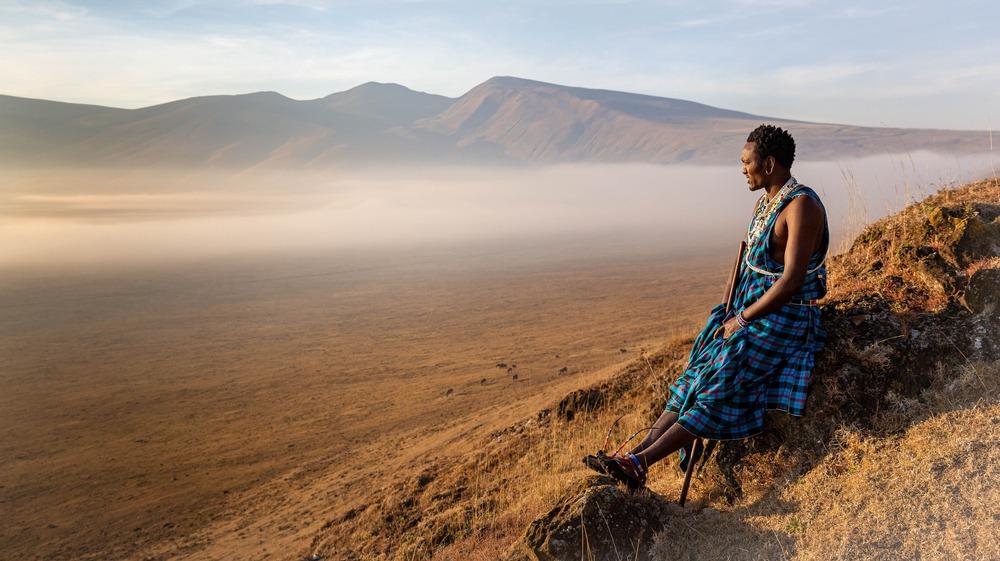
The Maasai are warriors found mainly in northern Tanzania and southwestern Kenya. To meet them, we recommend the areas surrounding the parks – the tribes no longer live inside, as they were expelled from their ancestral lands for wildlife conservation. Many live:
- in the village of Naberera, on the road to Tarangire National Park,
- in the village of Longido near Mount Kilimanjaro (which today has nearly 2,000 inhabitants),
- in the village of Kitumbeine, near Lake Natron.
- on the edges of the Ngorongoro crater.
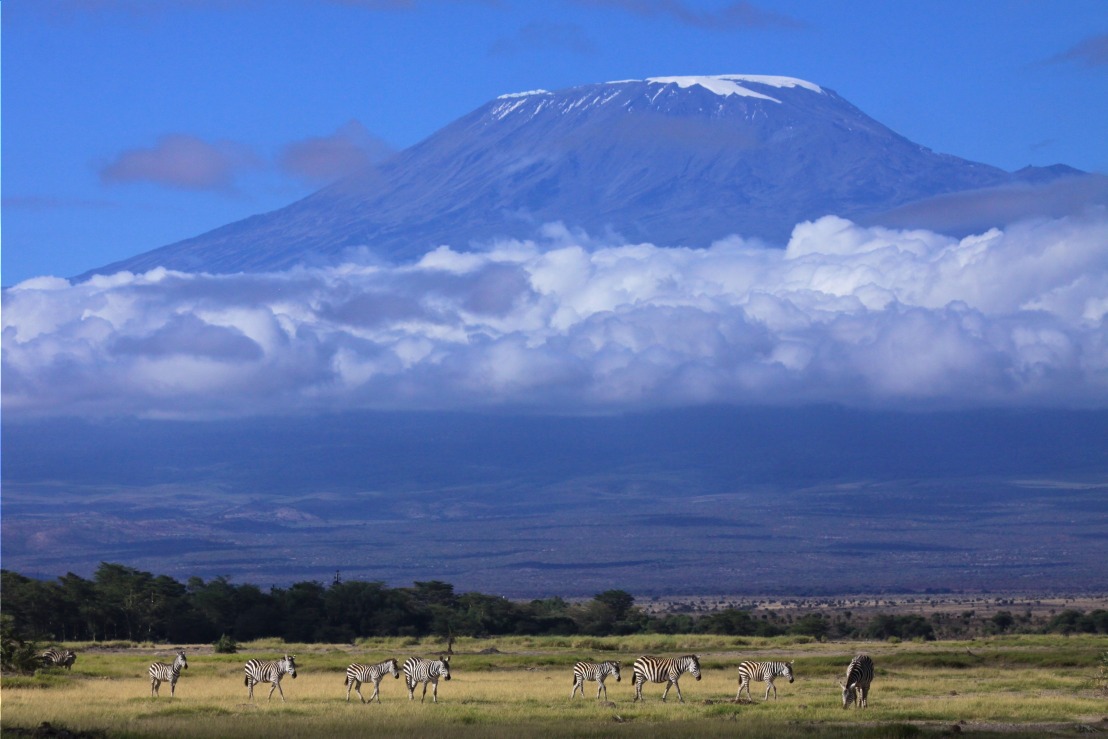
Among the most spectacular sites to discover near Maasai villages, one can mention the unmissable Mount Kilimanjaro, Tarangire National Park (renowned for its large population of baobabs and elephants), the Ngorongoro highlands and their craters (including the small caldera of Olmuti).
You can also meet them near the Empakai crater or close to Lake Natron (and its countless birds). An opportunity to discover the sublime landscapes that surround them, such as the savanna, volcanoes, craters, lakes, and an incredible variety of wild animals.
What is it like to meet the Maasai people?
In recent years, the Maasai people have come to see tourism as an additional source of income. Shows, village visits, homestays, the sale of handicrafts… More and more Maasai villages are opening their doors to travelers.
This is the perfect opportunity to immerse yourself in their culture and learn more about their rituals, as well as Maasai food. They are also excellent guides for discovering the reserves. There's no better tracker than someone who knows nature by heart! The slightest trace and you're on the trail of savanna animals…
What you need to know before visiting a village
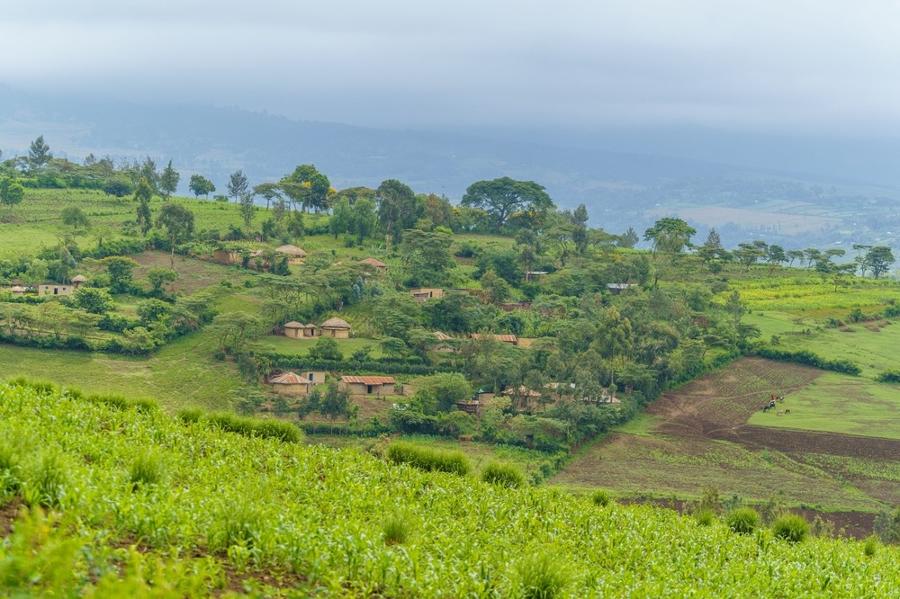
Visiting a Maasai village allows you to better understand the way of life of this semi-nomadic people and their daily routines. Social organization, food, cattle herding – the encounter gives a concrete picture of their everyday life.
Many travelers want to meet members of the Maasai community. This is possible, but requires caution. Indeed, in Tanzania (as in Kenya), many "fake villages" have been created in recent years to satisfy tourists' curiosity and desire for folkloristic experiences…
In these fake villages, the life of the Maasai people is staged: welcome dances, feigned surprise at cultural differences, and quick visits – these "encounters" match the expected image of a "primitive people." But just because the Maasai maintain ancestral customs doesn't mean they are cut off from the world!
Tips for responsible tourism
This fake village experience is neither interesting for travelers nor beneficial for residents. To get something out of it, you must set aside your preconceptions and not seek to find clichés, but be ready to discover the Maasai as they truly are.
Conversely, some authentic villages choose to welcome reasoned, limited, and responsible tourism. These are the villages that should be visited. To do this, plan for time (at least two days), as true immersion cannot happen in just a few hours…
Once there, ask the residents for consent before photographing them. It may be possible to attend community events, provided you have been invited. For this, it is recommended to use a local guide for a truly authentic encounter.
Discover our Maasai Safari in TanzaniaThis trek & safari journey with the Maasai tribe will take you to meet the semi-nomadic warriors and show you the most beautiful corners of Tanzania – from Tarangire National Park to Lake Manyara, passing through the villages of Naiyobi and Mtowembu. |
Who are the Maasai?
The customs of the Maasai people
Tribal identity within the Manyattas
The Maasai are a semi-nomadic people guided by the need to feed their cattle. Animals thus determine the tribe's seasonal migration routes. Their daily life revolves around simple tasks: meal preparation, livestock surveillance, camp maintenance.
Families live in huts built by hand, without electricity or running water, within manyattas – traditional hut encampments, made from cow dung, earth, and palm branches.
Simplicity is integral to their identity. Inside the small traditional houses, beds are made from cow hides stretched over wooden planks.
Birth
When a woman gives birth to a child, an animal is sacrificed for the event, then shared among the village women who come to bring milk to the mother. A second sacrifice, most often a sheep, provides fat to support the young mother during her recovery.
From birth, the mother dedicates herself entirely to her baby until it begins to walk. A newborn doesn't always receive a name immediately. Some families wait several weeks before assigning one.
Childhood among the Maasai
Among the Maasai people, education is not solely the responsibility of parents, but of the entire community. Indeed, education is a communal affair where any member can intervene or punish a child!
Childhood is also when the Maasai wear their first jewelry. Around age 7, children have the upper part of their ears pierced; the lobe is then gradually enlarged using an expander. For them, jewelry is not simply aesthetic adornment, but symbols that display their social status.
Adolescence and the passage to adulthood
Among young girls, adolescence is marked by active participation in domestic tasks. They ensure cattle milking, fetch water, and maintain the manyattas. They also support their mothers in raising younger children.
For boys, adolescence means many prohibitions and circumcision, an ancestral rite that marks the passage to adulthood – called moran. Once in the morans category, the young man gains more freedom, but is at the same time subject to numerous rites of passage under the authority of elders. During this period, they spend most of their time caring for livestock.
Circumcision is an important step for both boys and girls. Contrary to popular belief: in the Maasai tribe this ancestral rite is perpetuated by the will of women, not men – unlike other tribes.
When meeting the Maasai, this subject can be brought up. But beware, this requires great caution to avoid offending the sensibilities of the locals and not being perceived as disrespectful.
Their social organization
Polygamy
Polygamy is very common among the Maasai. Some men can have up to thirty wives – having many women is considered a sign of prestige. Women, on their part, are entitled to only one husband.
Marriage is important and occupies a central place in Maasai social structure. Unions are often arranged between families (mainly to acquire livestock). Divorce does not exist in Maasai culture. Co-wives live without competition or jealousy and work together to maintain harmony in their households and their husband's well-being.
The family
Maasai children grow up with their mother, who passes on to them the values, skills, and customs of the tribe. The "elders" also play a central role, as they hold moral authority and make important decisions for the community. Their opinion is sought on major issues, and their wisdom is recognized and respected by the entire group.
Their daily way of life
Herding and food among the Maasai
In Maasai culture, the deity Enkaï has entrusted his followers with the mission of keeping and herding cattle – they are not owners, but guardians. Even though part of the population now lives in cities, many Maasai remain settled in the bush where herding remains the primary daily activity.
The Maasai primarily raise goats and cattle not so much for consumption (they eat little meat) but as a source of protein, such as milk.
Beyond the nutritional aspect, this approach allows them to preserve Enkaï's herds, but also to keep the animals alive so they can be used as a medium of exchange. Indeed, these are often passed down in inheritances or given as dowries upon marriage.
Honey, grains, and legumes are also privileged resources in the tribe's diet. One of the typical Maasai dishes is ugali; a sort of porridge made from water and corn flour, which can be eaten plain, sweet, or savory.
The importance of jewelry in Maasai culture
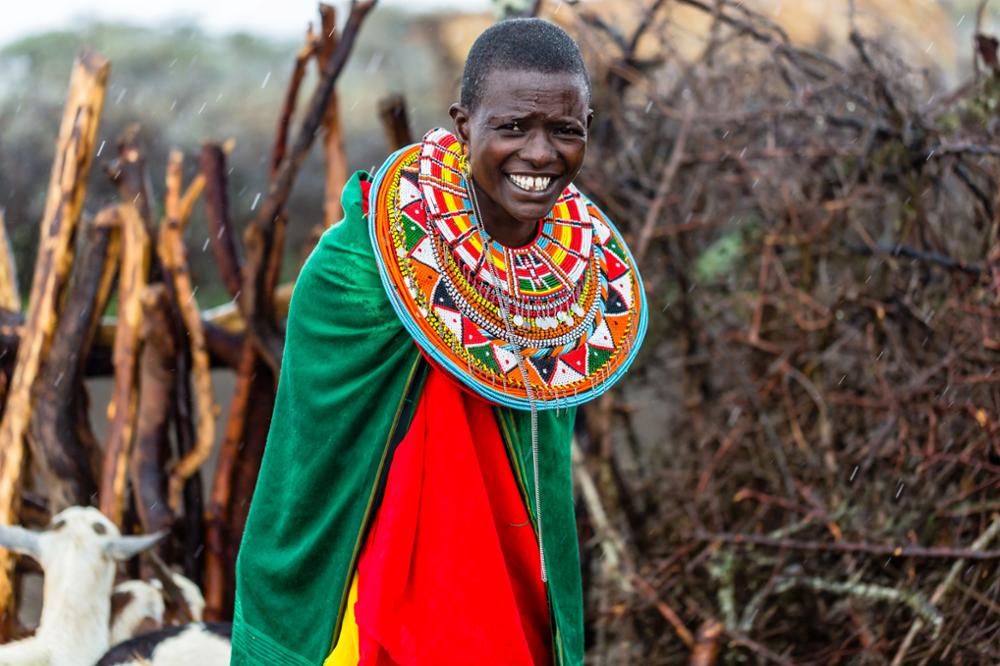
The Maasai are renowned for their jewelry, made by hand. Ornaments are created from glass beads, but also elements found along the way, such as feathers or pits, plastic, metal links, etc.
These elements give each piece of jewelry a unique character, as well as a very important sonic aspect for the Maasai, since these sounds accompany traditional dances during rites and customs.
Based on patterns or materials used, it is possible to identify the origin of a Maasai tribe. As for colors, they are associated with symbols.
Frequently asked questions
What language do the Maasai speak?
The Maasai first speak Maa (the language of the tribe). But many also speak Swahili, the official language of East Africa, which facilitates communication with other communities. Nowadays, more and more Maasai also speak English, due to tourism and schooling in major cities.
Why do the Maasai jump?
Jumping is an integral part of traditional Maasai dances. It first serves to evaluate the strength and endurance of young warriors, who compete with each other in contests. The higher a man jumps, the more prestige he gains within his group. These bounds, executed in rhythm, are also a strong cultural marker: they immediately make the community identifiable.