The Olduvai Museum
The Olduvai Museum
Perched at the top of the Olduvai Gorge, within the Ngorongoro Conservation Area, this museum documents the Leakey excavations and the fossil sites of Laetoli.
The Olduvai Museum stands at the summit of the eponymous gorge, in the northwestern part of the Ngorongoro Conservation Area, in Tanzanie. A small structure nestled some 5 km from the main road leading to the Serengeti plains, it documents one of East Africa's major paleoanthropological sites, where the Leakey family transformed our understanding of human origins.
Why visit the Olduvai Museum
Olduvai is not a prestigious museum: it is an interpretation center set right at the excavation site. The visit brings meaning to the landscape you traverse on safari between the Ngorongoro and the Serengeti. You'll understand why this gorge, stretching some fifty kilometers, concentrates fossil deposits spanning nearly two million years, and why the nearby Laetoli footprints revolutionized the history of bipedalism.
The stop logically completes a safari circuit in northern Tanzanie. Allow 45 minutes to 1.5 hours on-site depending on your interest in prehistory.
History of the site and excavations
The Olduvai Gorge owes its fame to work conducted from the 1930s onward by Louis and Mary Leakey. In 1959, Mary Leakey uncovered the first skull of Paranthropus boisei, a hominid dated to roughly 1.75 million years ago. This discovery gave decisive momentum to African paleoanthropology and established Olduvai as a world-reference site.
The museum itself, originally modest, was created to display some of the material from the Olduvai and neighboring Laetoli excavations. It sits within the Ngorongoro Conservation Area, inscribed on the UNESCO World Heritage List since 1979. Its management is jointly overseen by Tanzania's Department of Cultural Antiquities and the Ngorongoro Conservation Area authority.
In 2018, expansion and modernization work substantially improved the museum's presentation. A space was notably arranged for the Leakey family to continue their research on-site.
What to see in the museum
The exhibitions are primarily focused on the fossil sites of Olduvai and Laetoli. You will find:
- Stone tools from the Oldowan industry, among the earliest known.
- Hominid and mammal fossils from local excavations.
- A room dedicated to the fossilized footprints of Laetoli, attributed to three Australopithecus afarensis who lived in the region approximately 3.6 million years ago.
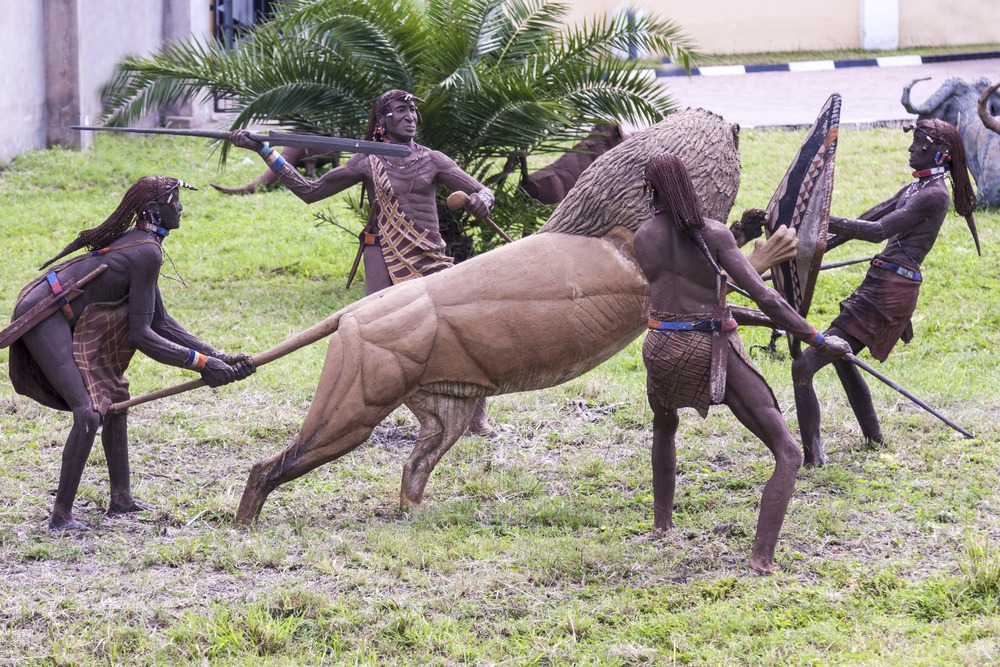
- Ethnographic sections addressing the cultures of the Datoga, Maasai, and Hadzabe, still present in the region.
- A theater space where presentations on human evolution are screened.
The majority of displayed objects are authentic. A few pieces, notably certain particularly precious hominid skulls, are presented as casts—a common practice in paleoanthropology museums.
A gift shop at the exit offers local crafts and a few works on African prehistory.
Practical information
- Guided tour mandatory, generally in English. Entry is with a museum commentator, in addition to your safari guide.
- The museum operates with a small team, largely drawn from the local Maasai community.
- Entrance fees: a ticket specific to the museum is added to the access fees for the Ngorongoro Conservation Area. Budget a tip for the commentator.
- Duration: 45 minutes to 1.5 hours depending on your interest.
How to get there
The museum is not accessible by public transport. It is visited exclusively as part of a safari, typically in a 4x4 with a driver-guide. It naturally falls on the route connecting the Ngorongoro crater to the Arusha National Park or the Serengeti plains, about 5 km from the main track. The detour typically adds 1 to 2 hours to your safari day.
When to go
The museum is open year-round, but access depends on the condition of the Ngorongoro and Serengeti tracks. The dry season, from June to October, offers the most reliable travel conditions. A second window opens from late December to February, between the two rainy seasons. During heavy rains in March-April, certain secondary tracks may become waterlogged, though this doesn't always prevent access to the museum itself.
Nearby
The Olduvai Museum fits into a set of major sites in northern Tanzanie:
- The Ngorongoro crater, a few hours' drive away, the heart of the conservation area.
- The Serengeti plains, the immediate extension to the west.
- The Laetoli footprint site, located further south (access highly restricted, generally not visitable).
- The Great Rift Valley, of which the Olduvai Gorge is one of the geological outcrops.
- The Boma Natural History Museum in Arusha, a useful complement on regional fauna and geology.
Frequently asked questions
Frequently asked questions
The museum sits within the Ngorongoro Conservation Area, inscribed on the UNESCO World Heritage List since 1979. It is the entire zone, including the Olduvai Gorge, that benefits from this protection.
No. The visit is led by a museum commentator, primarily in English. You also arrive with your safari guide, essential for traveling within the conservation area.
Allow between 45 minutes and 1.5 hours depending on your interest in paleoanthropology and the time spent on presentations.
Olduvai is a gorge rich in hominid fossils and stone tools, excavated since the 1930s. Laetoli, further south, is famous for its fossilized footprints attributed to Australopithecus afarensis, dated to approximately 3.6 million years ago. The Olduvai Museum documents both sites.
The majority are. A few sensitive pieces, notably certain hominid skulls, are presented as casts, which is common in paleoanthropology museums.
Plan your trip
To integrate the Olduvai Museum into a circuit in northern Tanzanie, consult our tailor-made itineraries for travel to Tanzanie.
Interested in this visit?
We can include it in your personalised itinerary.