Tsavo East National Park
Tsavo East National Park
Tsavo East sprawls across more than 13,000 km² in south-eastern Kenya. Red elephants, lions, Lugard Falls and Yatta Plateau: a wild safari far from the crowds.
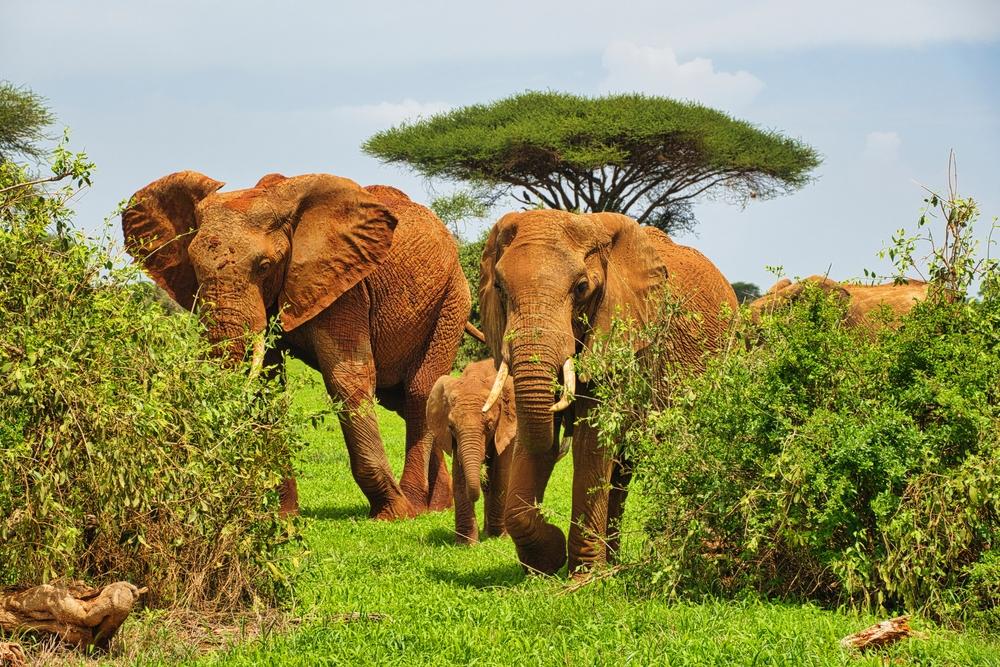
Tsavo East National Park stretches over more than 13,000 km² in south-eastern Kenya, between Voi and the coast. It is one of Africa's largest reserves. It is known for its red elephants — coated in laterite dust — its semi-arid savanna landscapes and its herds of buffalo. Less frequented than the Masai Mara, it offers a wild and undisturbed experience.
Quick practical information
Entrance: paid (Kenya Wildlife Service conservation fees, rates in USD or KES)
Access: from Nairobi via the Mombasa highway (approximately 4-5 hours drive); from Mombasa (approximately 2-3 hours). Main gate: Voi Gate.
Recommended duration: 2 to 3 days minimum to cover key zones
Clothing: neutral clothing (khaki, beige, olive green); hat and sunscreen essential
Accessibility for people with disabilities: limited — dirt tracks, variable lodges
What to see
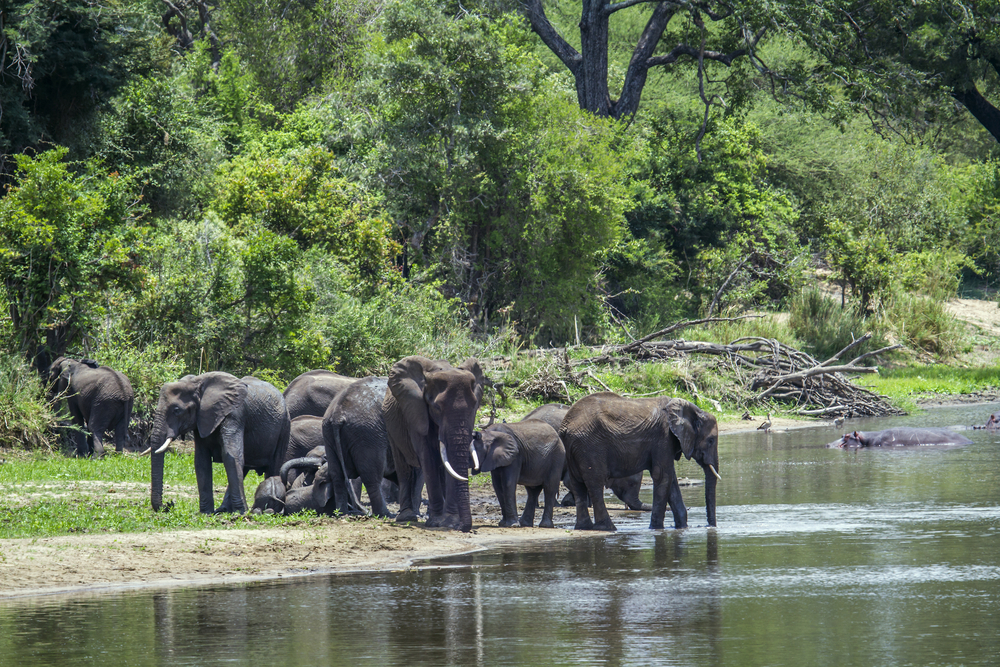
Wildlife is dense and varied: elephants, lions, leopards, cheetahs, buffalo, zebras, reticulated giraffes and hippopotamuses. The park is home to one of Africa's largest elephant populations. The Galana River (Athi-Galana-Sabaki) crosses the park from north to south and concentrates wildlife during the dry season.
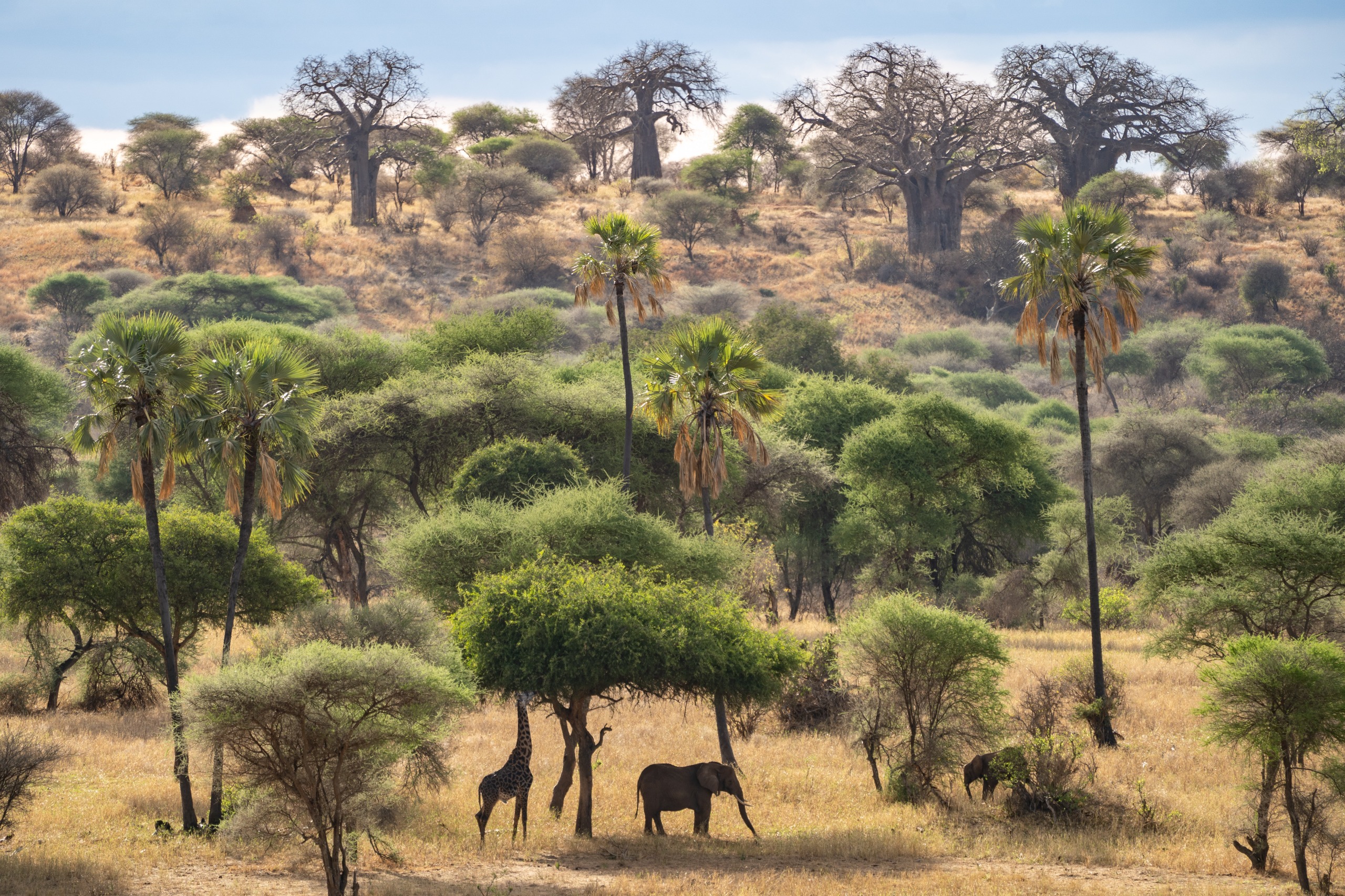
The landscape alternates between open plains, black lava hills (Yatta Plateau — one of the world's longest lava plateaus), riverine forests and semi-desert zones. Sunsets over the red savanna are breathtaking.
History and context
Tsavo East was created in 1948, alongside Tsavo West, together forming Kenya's largest national park. The name "Tsavo" comes from the river of the same name. The park is infamous for the Tsavo man-eating lions (1898), which attacked workers building the Uganda Railway — an episode documented and exhibited at the Field Museum in Chicago.
During the 1970s-1980s, massive poaching decimated elephant and rhinoceros populations. Conservation efforts by Kenya Wildlife Service have since allowed significant population recovery.
Highlights of your visit
Voi Safari Lodge waterhole
An artificial waterhole visible from the lodge terrace attracts elephants, buffalo and antelope at all hours. Perfect for observing without leaving your seat, particularly in late afternoon.
Lugard Falls
On the Galana River, the waters have carved gorges through volcanic rock. The site is accessible by vehicle and allows for a short walk. Crocodiles and hippopotamuses frequent the banks.
Yatta Plateau
This lava plateau, stretching over 290 km, runs along the northern bank of the Galana. It represents a major geographical landmark and habitat for numerous species. The view from its heights sweeps across endless savanna.
Red elephants
Tsavo East's elephants roll in the red laterite soil, giving them a distinctive tint. Watching them bathe or coat themselves in dust is one of the park's most photographed spectacles.
Photography tips
The golden light in the first hours after sunrise and the last hour before sunset is ideal. Red elephants stand out particularly well in soft backlighting. At waterholes, position yourself early and wait — animal arrivals are unpredictable. A telephoto lens (minimum 300 mm) is recommended for wildlife. Avoid using flash at all times.
Location and access
Tsavo East is located in Taita-Taveta County, Kenya. The main Voi Gate entrance is at Voi, accessible from Nairobi via the A109 road (Mombasa highway). Charter flights from Nairobi (Wilson Airport) or Mombasa serve several airstrips within the park. The park is adjacent to Tsavo West, separated by road and the Nairobi-Mombasa railway.
Important note: this park is located in Kenya, not Tanzania. If travelling from Tanzania, the nearest border is at Taveta/Holili, approximately 100 km south-west of Voi.
Nearby attractions
Tsavo West National Park — twin of Tsavo East, it boasts Mount Kilimanjaro as a backdrop and the Mzima springs.
Amboseli National Park — famous for its elephants and views of Mount Kilimanjaro, west of Tsavo.
Shimba Hills National Reserve — coastal forest harbouring sable antelopes, to the south-east.
Frequently asked questions
The dry season (June to October, and January-February) is most favourable: vegetation is low, wildlife concentrates around waterholes and tracks are passable. The heavy rains (March-May) make some areas inaccessible.
Yes, the two parks are adjacent and often combined over 4 to 5 days. Tsavo West is more hilly and verdant; Tsavo East is flatter and more arid. Each has its own character.
A 4x4 vehicle is essential. It is possible to visit independently with your own vehicle, but a local guide knows the areas frequented by wildlife and optimises your chances of spotting animals.
Yes, photography is free throughout the park. It is forbidden to leave your vehicle except in designated areas, which limits certain angles but ensures your safety.
Yes, provided you choose a comfortable lodge with a visible waterhole. Vehicle safaris do not require walking and are suitable for all ages. Check the minimum age accepted by each lodge before booking.
Yes, Tsavo East is entirely located in Kenya. It is sometimes included in combined Kenya-Tanzania itineraries, but administratively and geographically, it belongs to Kenya.
Want to discover this destination?
Our local advisors design your tailor-made trip.