Tarangire National Park
Tarangire National Park
Hundreds of elephants, millennia-old baobabs, and a permanent river: Tarangire National Park in northern Tanzania offers a more intimate safari experience than the Serengeti, with equally spectacular wildlife.
Tarangire National Park stretches across northern Tanzania, a few hours' drive from Arusha. It takes its name from the Tarangire River, the region's only permanent water source during the dry season. This distinctive feature attracts some of East Africa's densest elephant concentrations, alongside giant baobabs that punctuate the plains. Less visited than the Serengeti, Tarangire offers a more intimate safari experience.
Quick Facts at a Glance
Admission: Fee required — entrance fees set by the Tanzania National Parks Authority (TANAPA), payable online or at the gate
Best time to visit: June to October (dry season) for animal concentrations around the river
Recommended duration: At least 1 to 2 days to cover the main zones
Access: Paved road from Arusha to the main Arusha-Tarangire gate; 4×4 vehicle recommended within the park
What to wear: Neutral clothing (khaki, beige, olive green); hat and sunscreen essential
Accessibility: Limited — trails are not specially equipped; check with your local agency
What You'll See
Tarangire is above all the park of elephants. During the dry season, hundreds of individuals converge on the river, forming impressive herds. The millennia-old baobabs — some hollow, inhabited by animals — shape a landscape unique to Tanzania. The park also hosts substantial populations of buffalo, zebras, wildebeest, Maasai giraffes, and lions. Birdwatchers have recorded more than 550 bird species here, including the Somali ostrich and the Abyssinian ground hornbill.
History and Context
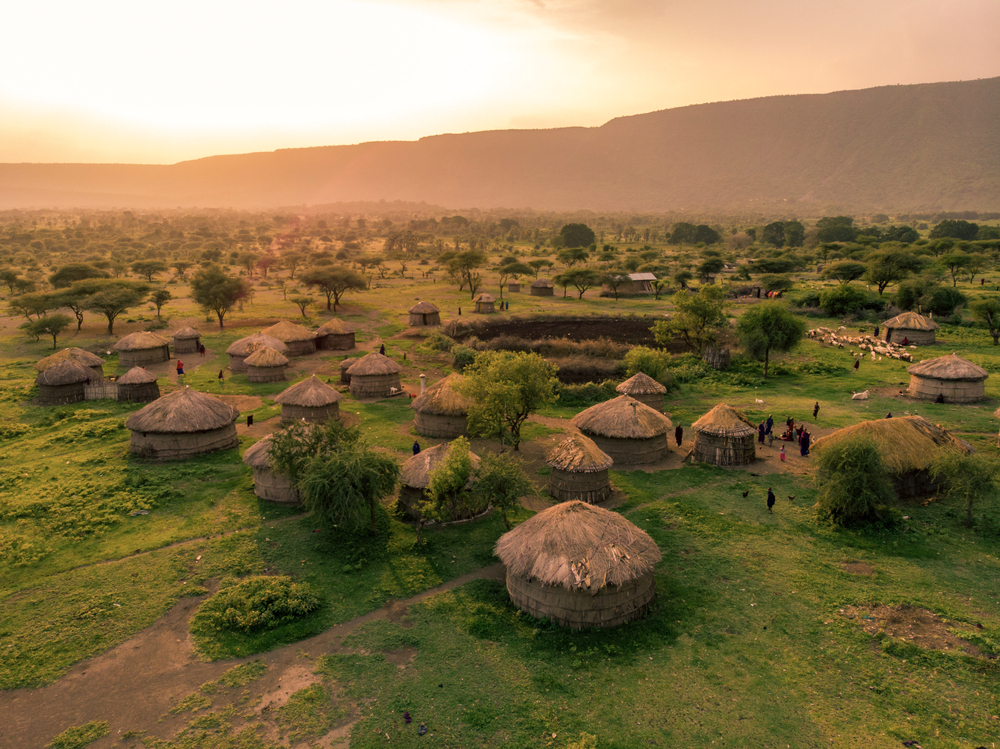
Tarangire was declared a national park in 1970. Its territory covers approximately 2,850 km². The Tarangire River originates in the Kondoa highlands and flows through the park from south to north before emptying into Lake Burungi. For centuries, the Maasai have used these lands for seasonal grazing; community buffer zones around the park today maintain coexistence between pastoralism and wildlife.
Highlights of Your Visit
Elephants of the Tarangire River
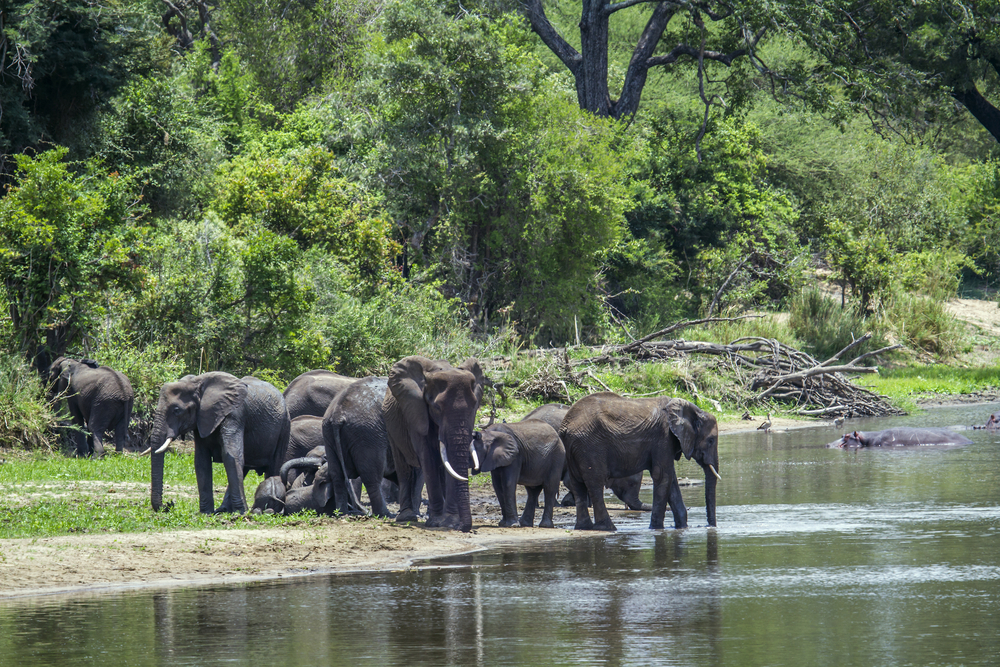
Between July and October, the river becomes a spectacular gathering point. Entire elephant families drink, bathe, and dig into the sandy riverbed to reach underground water. It's one of the rare places where you can observe this digging behavior.
Giant Baobabs
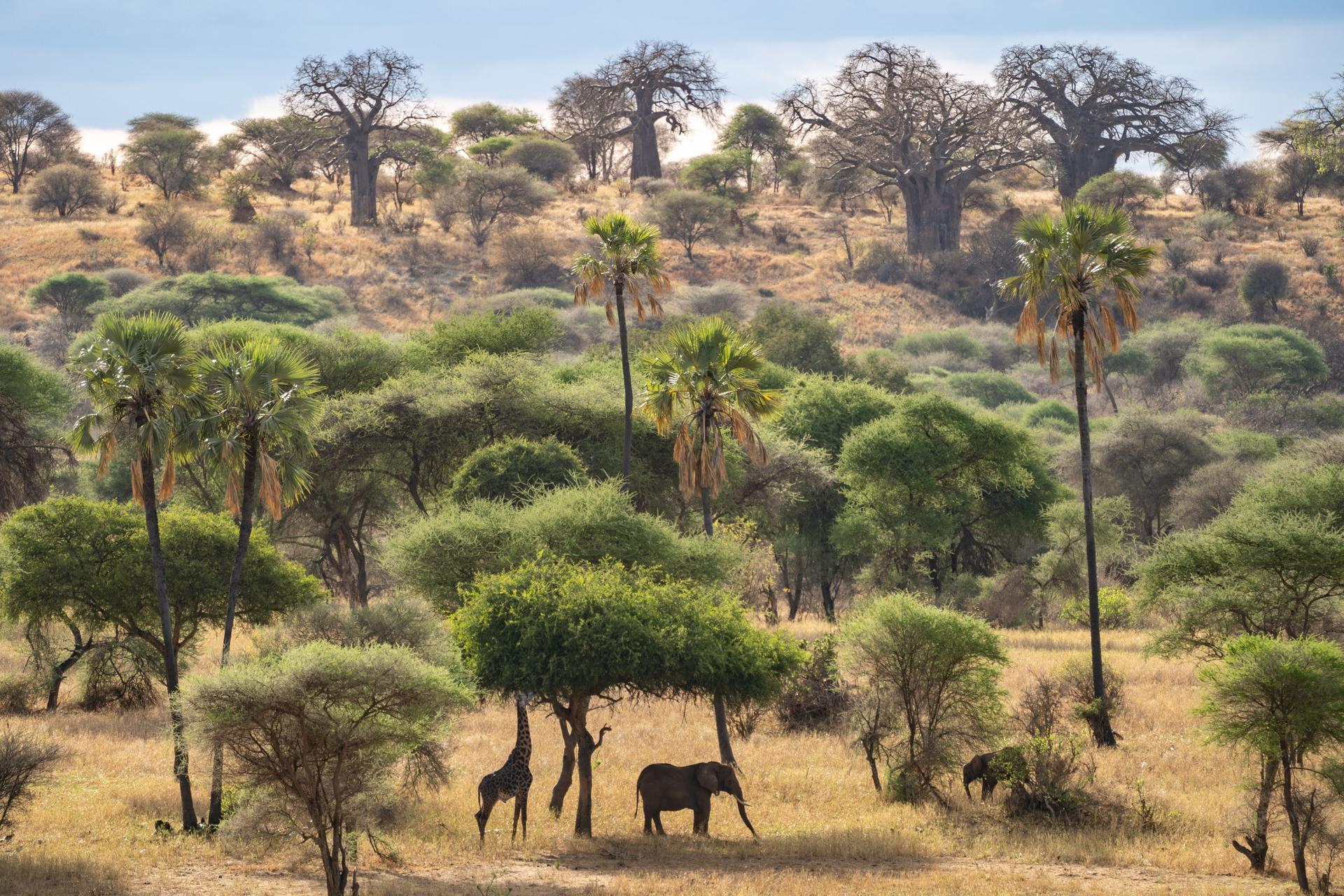
Tarangire boasts an exceptional density of Adansonia digitata baobabs. Some specimens reach several meters in circumference and serve as shelter for bat colonies, pythons, or small mammals. Their silhouette at sunset is the park's emblematic image.
Silale Marsh
In the southern part of the park, Silale Marsh attracts buffalo, elephants, and a wide variety of aquatic birds. It's a less-visited zone, ideal for a half-day of relaxed safari away from other vehicles.
Night Safaris and Walking Excursions
Some private camps located outside the strict park boundaries offer night safaris and guided walks — activities prohibited within the national park itself. These outings allow you to observe nocturnal species (genets, civets, hunting lions) and read tracks on the ground with a Maasai guide.
Photography Tips
The golden light during the first hours after sunrise is ideal for photographing elephants near the river. Baobabs lend themselves to silhouette shots in backlit sunset conditions. Stay in the vehicle to avoid disturbing animals; a telephoto lens (200mm minimum) is recommended. During the rainy season, verdant vegetation offers striking contrast with the gray baobab trunks.
Location and Access
The park's main gate is located about 120 km southwest of Arusha, on the road to Dodoma. Most visitors arrive from Arusha by safari vehicle. Tarangire naturally integrates into a circuit combining Lake Manyara, the Ngorongoro Crater, and the Serengeti. No public transportation serves the park; a private vehicle with a driver-guide is essential.
Nearby Attractions
Lake Manyara — neighboring national park renowned for its tree-climbing lions and pink flamingos.
Ngorongoro Crater — volcanic caldera hosting dense wildlife, about two hours' drive away.
Arusha — principal departure city for northern Tanzania safaris, with craft markets and local agencies.
Serengeti — vast plains of the wildebeest migration, accessible by extending the circuit westward.
Frequently asked questions
The dry season, from June to October, is optimal: animals concentrate around the Tarangire River, trails are passable, and sparse vegetation facilitates wildlife viewing. The rainy season (November to May) offers lush landscapes and fewer visitors, but some trails become difficult to access.
Yes. A classic week-long circuit includes Tarangire (1–2 nights), Lake Manyara (1 night), Ngorongoro (1–2 nights), and the Serengeti (2–3 nights). Your local agency can tailor the itinerary based on season and your priorities.
During the dry season, Tarangire hosts one of Tanzania's largest elephant concentrations. Herds of several dozen to several hundred individuals regularly gather around the river. This is one of the park's distinctive characteristics compared to the Serengeti or Ngorongoro.
Guided walks are not allowed within the national park itself. Some private camps located in adjacent buffer zones offer foot activities led by accredited guides. Check with your accommodation before booking.
Choose neutral colors (khaki, beige, olive green) to avoid disturbing animals. Pack lightweight layers for cool mornings and effective sun protection for the hot hours. Dark or brightly colored clothing is discouraged.
During high season (July–October), accommodations in and around the park often fill up several months ahead. It's strongly advisable to reserve your lodge or camp and safari vehicle well in advance, especially if traveling with family or in a group.
Want to discover this destination?
Our local advisors design your tailor-made trip.