Mweka Hut
Mweka Hut
Mweka Hut is the classic descent camp on Mount Kilimanjaro, sitting at 3,100 m on the southern slope. Mountain forest, starlit skies, and the transition to the plains below: a key waypoint after Uhuru Peak.
Mweka Hut is an altitude camp located on the southern slope of Mount Kilimanjaro, at approximately 3,100 meters, along the Mweka Route. This camp serves as the classic descent stage after summiting: nearly all climbers who reach Uhuru Peak via the Machame, Lemosho, or Shira routes spend their return night here. Surrounded by dense montane forest, it marks the transition between the alpine zone and the lush vegetation of the lower slopes.
Practical Information at a Glance
Access: On foot only, via the Mweka Route (descent) or ascent from Mweka Gate.
Altitude: Approximately 3,100 m.
Accommodation: Camping tents only — no permanent structures for climbers.
Recommended Duration: One night as part of a multi-day organized trek.
Mandatory Reservation: Through a TANAPA-authorized agency; access to Kilimanjaro is prohibited without a certified guide.
Accessibility: Not wheelchair accessible.
What You'll See
The camp opens onto a clearing surrounded by Erica arborea and tree ferns. On clear days, your view extends across the Kilimanjaro plains and toward Moshi in the distance. Vegetation becomes dense again after the lunar landscapes of the crater: mosses, lichens, and forest birds reappear as you approach the camp.
History and Context
The Mweka Route is the most direct descent path from Kilimanjaro. It takes its name from the College of African Wildlife Management in Mweka, an institution founded in 1963 nearby. The intermediate camp was established to allow climbers to recover after the summit effort before returning to the gate the following morning.
Highlights of Your Visit
The Descent Through the Forest
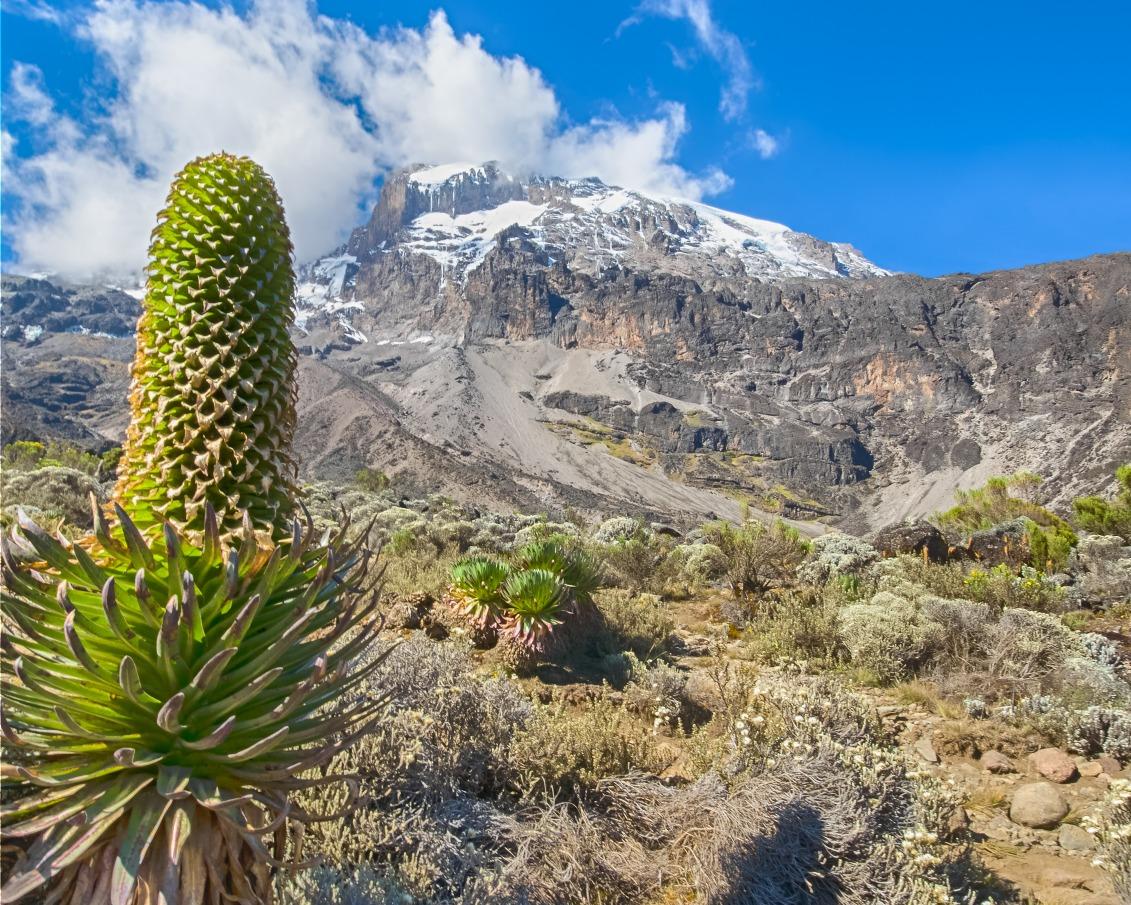
After the rocky and glaciated summit zones, the descent to Mweka Hut passes through giant groundsel heathland and then a heath forest. The change in vegetation is rapid and striking. Your legs feel the effort, but the air grows warmer and more humid with every hundred meters of elevation lost.
A Night Under the Stars
At 3,100 m, light pollution is virtually nonexistent. On clear nights, Kilimanjaro's sky offers a remarkable starlit canopy. This is often your last night at altitude before returning to Moshi — a moment of calm after the intensity of the summit push.
Forest Wildlife
Black-and-white colobus monkeys and several species of bulbuls frequent the camp surroundings. Local guides occasionally report traces of buffalo or leopards in the surrounding forest, though direct sightings remain rare.
Photography Tips
Morning light, before departure toward Mweka Gate, is soft and filtered through the canopy — ideal for photographing forest vegetation. Portraits of porters and guides at camp, often relaxed after the collective effort, yield authentic images. Avoid using flash in the forest to minimize disturbance to wildlife.
Location and Access
Mweka Hut sits on the southern slope of Mount Kilimanjaro within Kilimanjaro National Park. Mweka Gate, the starting and finishing point of the eponymous route, is accessible from Moshi by vehicle. All treks are organized through authorized agencies based in Moshi or Arusha. Independent access to the park is not permitted.
Nearby Attractions
Mweka Gate — park entrance/exit point, where summit certificates are issued.
Moshi — the starting point for treks, a lively town well-equipped for trekkers.
Barafu Hut — summit base camp, the stage preceding the final push to Uhuru Peak.
Kilimanjaro National Park — protected setting designated as a UNESCO World Heritage Site.
Frequently asked questions
In practice, yes. The Mweka Route is used almost exclusively as a descent route after summiting. Ascending via this route is technically possible but rarely practiced, as it is steep and offers minimal acclimatization time.
At 3,100 m, nights remain cool, often ranging from 5 °C to 10 °C. A sleeping bag rated for sub-zero temperatures is still recommended, as conditions can vary depending on the season.
Basic pit toilets are available at the camp, managed by the national park. There are no showers or running water. Trek agencies typically provide hot water for washing.
Yes, in fact this is the standard configuration. The Machame, Lemosho, and Shira routes all use Mweka as their descent route. Your agency will organize the full circuit accordingly.
The best weather windows for Kilimanjaro are January–March and June–October. The main rainy season (April–May) makes trails muddy and visibility poor, but trekking is still possible.
Want to discover this destination?
Our local advisors design your tailor-made trip.