Kilimanjaro International Airport
Kilimanjaro International Airport
Tanzania's second international airport, Kilimanjaro (JRO) serves Moshi, Arusha and the major northern parks 40-50 km from its runways.
Kilimanjaro International Airport (IATA code JRO and ICAO code HTKJ) is Tanzania's second international airport after Julius Nyerere in Dar es Salaam. Located approximately 40 km from Moshi and 50 km from Arusha, it serves as the primary air gateway for reaching Kilimanjaro National Park, the Serengeti and Ngorongoro Conservation Area.
Why land here
For most travelers heading to northern Tanzanie, landing at Kilimanjaro rather than Dar es Salaam avoids an extra domestic flight of over an hour. The airport directly serves the gateways to major parks and the city of Moshi, the traditional base for climbing Africa's tallest peak.
Its modest size translates into generally swift arrival procedures. Security checks and baggage collection take place in a compact space, without the complexity of major international hubs. In return, common areas are tight and air conditioning can be limited during peak periods.
Airport history
The airport was inaugurated on December 2, 1971. Its construction was financed by a long-term loan from the Italian government, costing approximately 13 million US dollars. Originally, it was intended mainly to serve regional connections in northern Tanzanie, supporting the cities of Arusha and Moshi.
The growth of tourism around Kilimanjaro and the northern parks quickly expanded its role. In 1998, according to official Tanzanian sources, the airport became the first international airport on the African continent to be privatized, with its management then entrusted to Kilimanjaro Airports Development Company (KADCO). A series of renovations carried out in 2003 modernized its facilities and established its international status.
A new chapter opened on February 19, 2014, with the signing of a financing agreement between Tanzanie and the Netherlands. The rehabilitation project, estimated at approximately €35.5 million in total, benefited from a Dutch contribution of 15 million euros, with the balance covered by the Tanzanian government. Works, launched in November 2015 and completed in May 2017, were entrusted to BAM International, a subsidiary of Royal BAM Group, for 39.7 million dollars. The airport's annual capacity thus increased from 600,000 to 1.2 million passengers.
Technical specifications
The airport covers an area of 109 km². Its runway, oriented east-west, measures 3,600 meters long by 45 meters wide, allowing it to accommodate large aircraft such as the Boeing 747-400 or Antonov 124. It is equipped with a Category II ILS precision landing system, which permits landings in reduced visibility conditions.
The infrastructure is now managed by Tanzania Airports Authority (TAA), which oversees all airports in the country.
Airlines and routes
The airport operates an East African regional network and several long-haul connections to Europe and the Middle East. Among the airlines regularly operating here are:
- KLM (connections to Amsterdam)
- Qatar Airways (via Doha)
- Turkish Airlines (via Istanbul)
- Ethiopian Airlines (via Addis Ababa)
On the regional side, regular flights connect Nairobi, Zanzibar, Dar es Salaam and Addis Ababa, complemented by connections to park airstrips (Serengeti, Manyara) operated by local airlines.
Services and facilities
The terminal brings together the services expected in a medium-sized international airport:
- Restaurants and cafés in public and boarding areas
- Exchange counters and ATMs
- Duty-free shops and souvenir outlets
- Car rental agencies
- Wi-Fi access (variable speed)
- Paid parking (moderate rates, payable in Tanzanian shillings)
An assistance desk supports travelers with visa formalities upon arrival. Shuttles and private taxis provide transfers to Moshi, Arusha and park lodges.
Getting to Moshi, Arusha and the parks
Three main options are available to travelers from the terminal:
- Transfer organized by agency or lodge: the most common option for tours, with driver waiting outside. Allow 45 minutes to 1 hour to Moshi, approximately 1 hour to Arusha.
- Public shuttle (shuttle bus): a shared service connects the airport to central Moshi and Arusha on schedules aligned with major flight arrivals.
- Private taxi: available outside, with fares to be negotiated before departure.
To reach Arusha National Park directly or the Ngorongoro area, transfers are typically by 4x4 road, arranged in advance by the operator.
Surroundings
The airport is a transit point, but its immediate surroundings open onto several sites in northern Tanzanie:
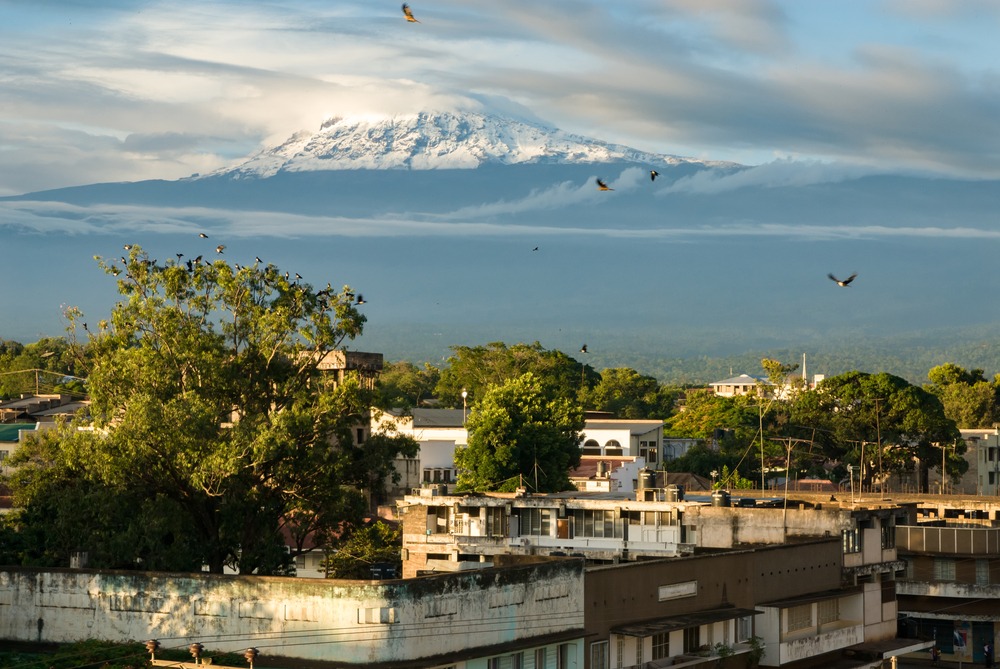
- Moshi, traditional starting point for Kilimanjaro
- Arusha National Park, accessible for a day trip
- The Boma Natural History Museum in Arusha, for a first encounter with the region's natural history
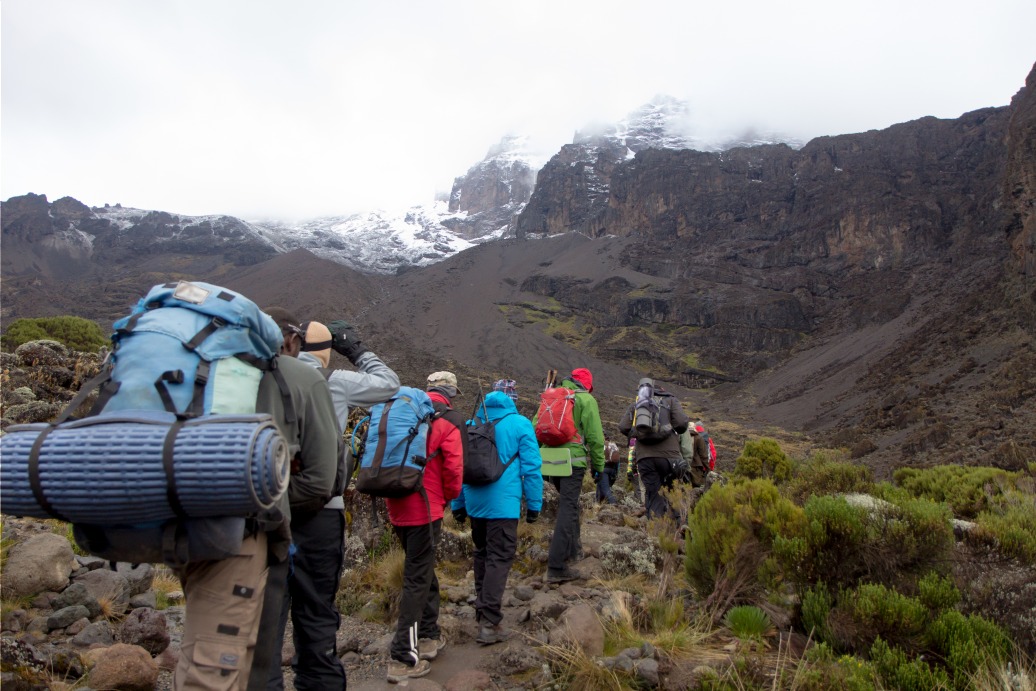
- Barranco Hut Camp, a key stop for hikers on Kilimanjaro routes
Frequently asked questions
Frequently asked questions
Yes, tourist visas are issued on arrival for most nationalities, payable in US dollars at a dedicated counter. It is still recommended to check current conditions with Tanzanian authorities or request an e-visa before departure to streamline the process.
The airport is located approximately 40 km from Moshi and 50 km from Arusha. Allow 45 minutes to 1 hour of driving to each city depending on traffic conditions.
The terminal has exchange counters and ATMs. It is advisable to withdraw or exchange a limited amount at the airport, as rates are often more favorable in town at Moshi or Arusha.
KLM, Qatar Airways, Turkish Airlines and Ethiopian Airlines operate the main international connections. Several regional airlines provide flights to Nairobi, Zanzibar and Dar es Salaam, as well as connections to park airstrips.
For an organized tour, transfer is typically included. If traveling independently, booking a shuttle or taxi in advance avoids last-minute negotiations, especially for evening arrivals.
Prepare your journey
Kilimanjaro International Airport is the logical starting point for combining a Kilimanjaro climb with safaris in the northern parks. To build a tailor-made itinerary suited to your length of stay, explore our trips to Tanzanie.
Interested in this visit?
We can include it in your personalised itinerary.